Q&A with ZZ Contracting – The Challenges and Benefits of Building The Rushton Passive Garden Suite
As demand grows for small-footprint housing that meets rigorous sustainability goals, garden suites are evolving beyond simple backyard dwellings. The Rushton Passive Garden Suite, built by ZZ Contracting, sets a new standard by achieving passive house-level performance within a compact, all-electric form. From advanced envelope detailing to finely crafted cedar cladding, every element of the build was considered for performance, durability, and aesthetics.
We spoke with the team at ZZ Contracting about the key challenges and breakthroughs involved in delivering this high-performance garden suite—and what others can learn from building at the intersection of sustainability and craft.
Constructing to passive standards requires precision. What were the biggest challenges in achieving the energy efficiency goals for this project?
The biggest challenge was achieving airtightness without compromise. The walls were built to 12½ inches thick with R43 insulation, and every joint had to be meticulously sealed to prevent thermal bridging.
Window and door installations also required a high level of precision. Every cut, seal, and connection had to be flawless to preserve the passive envelope and meet the strict energy performance criteria.
The project eliminated natural gas, relying solely on a 100-amp electrical service. How did this impact the mechanical and HVAC design?
Going all-electric meant every system had to be optimised for efficiency. We used a custom smart CERV system(Conditioning Energy Recovery Ventilator) that continuously monitors and adjusts air quality, temperature, and humidity with minimal energy use.
Without natural gas, the passive design elements—airtight construction, high R-value insulation, and triple-glazed windows—played an even more critical role in reducing heating and cooling demand from the outset.
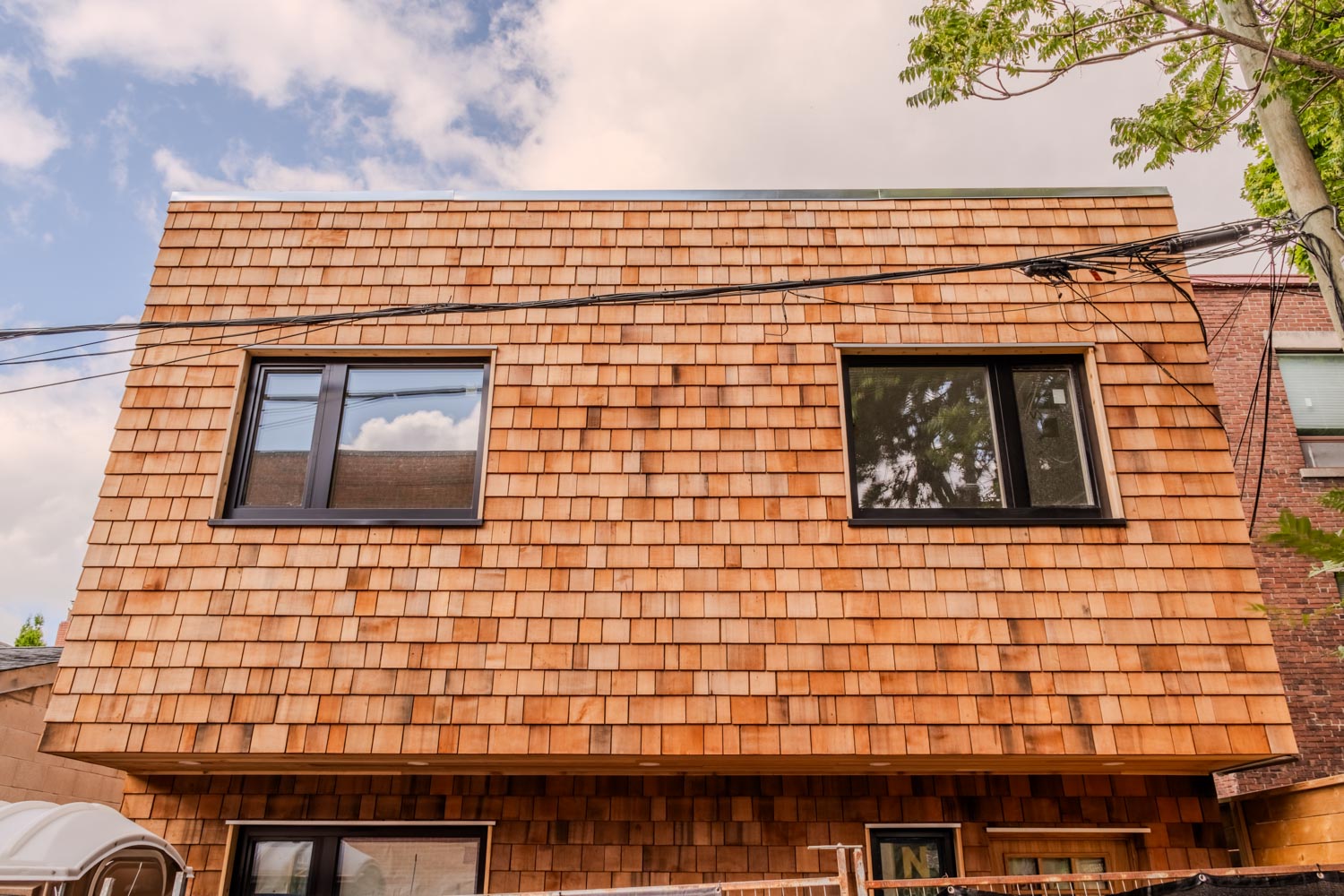
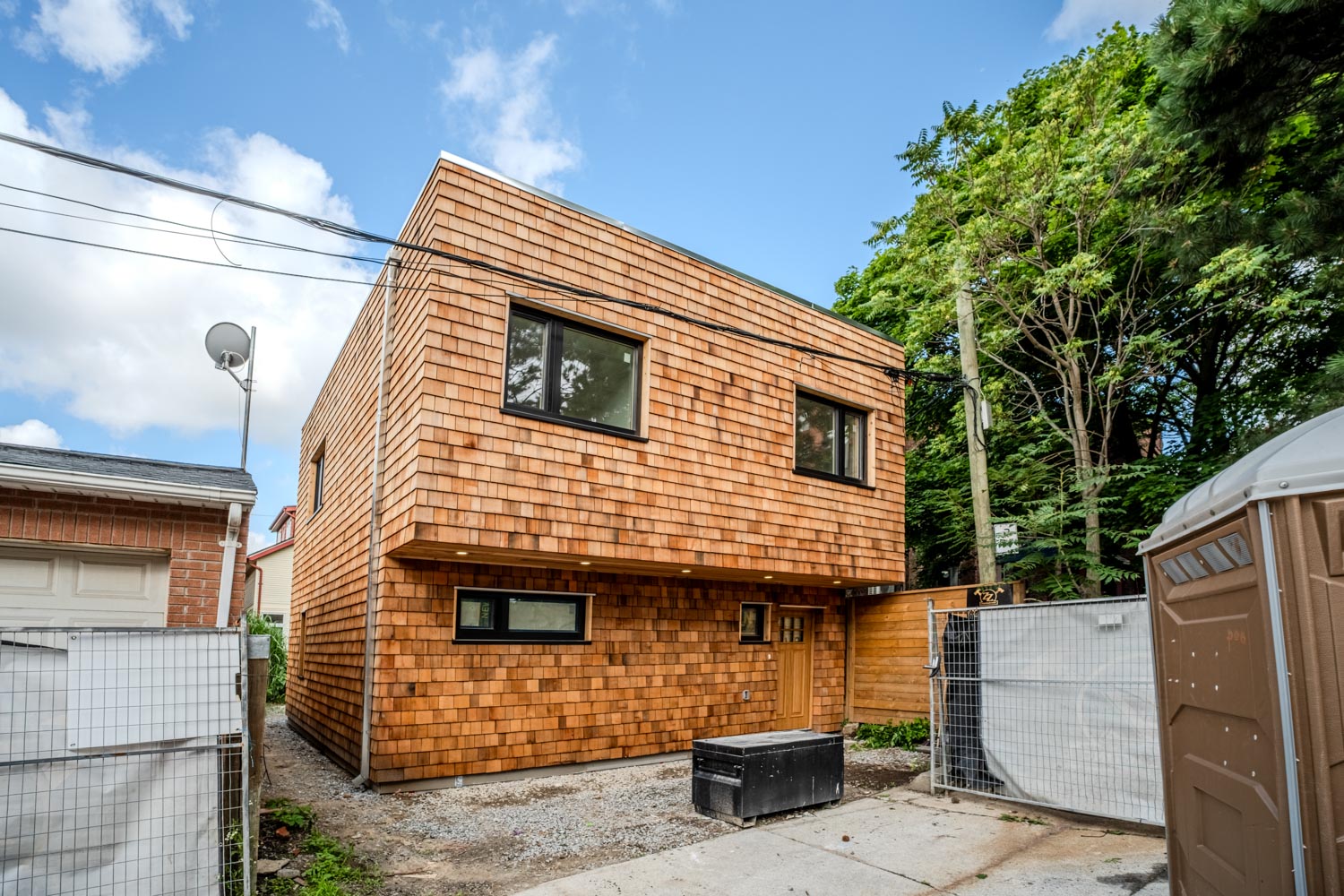
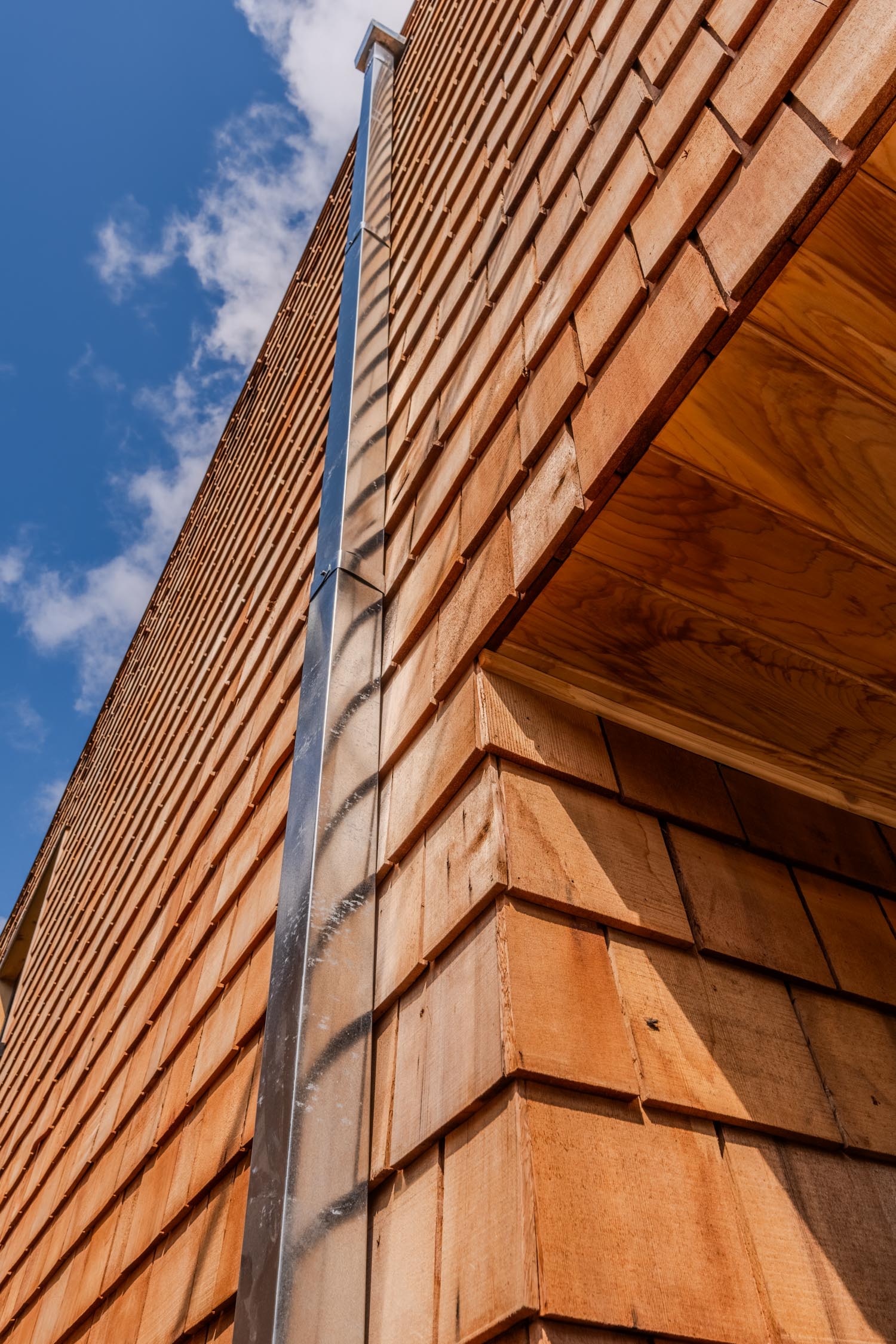
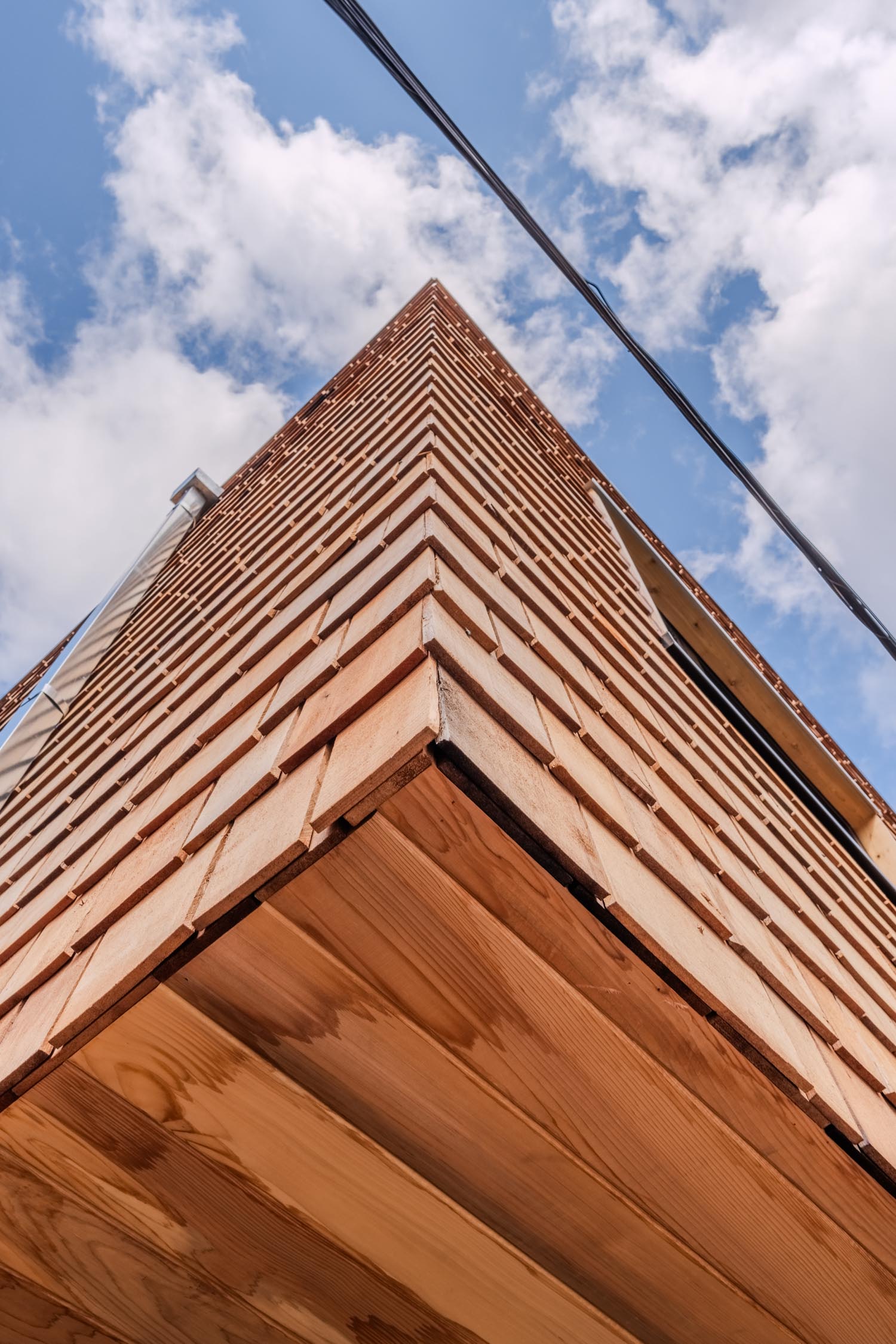
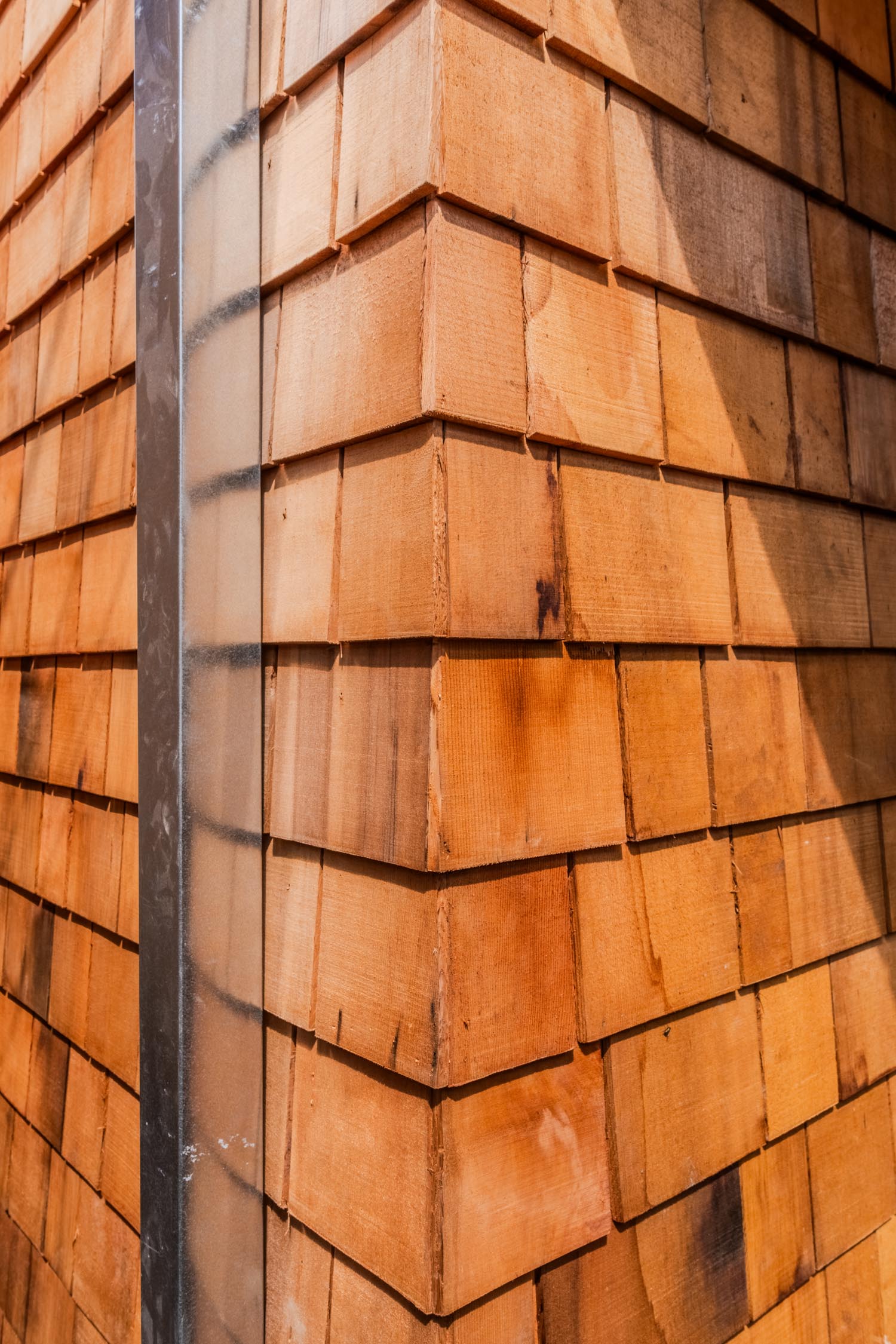
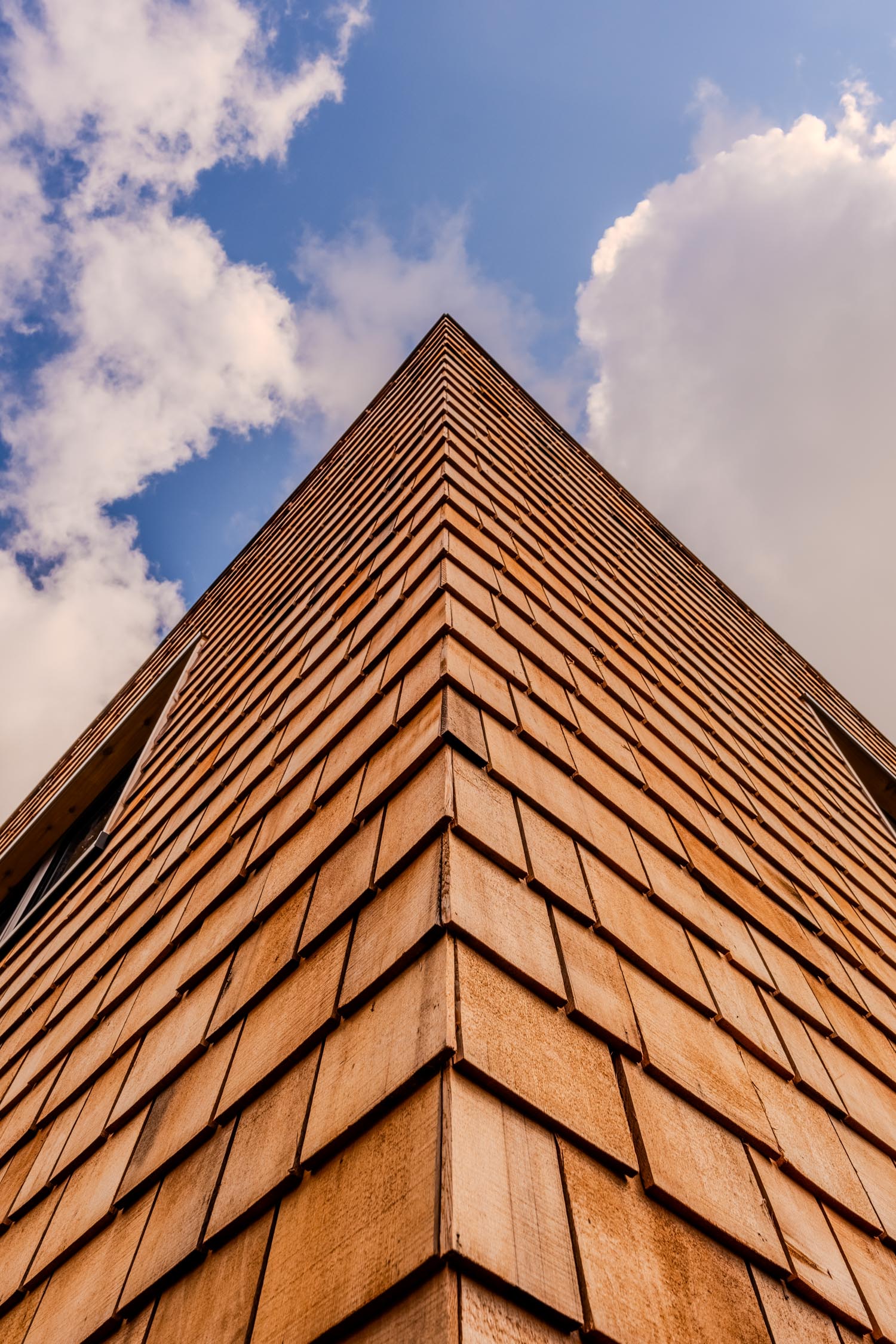
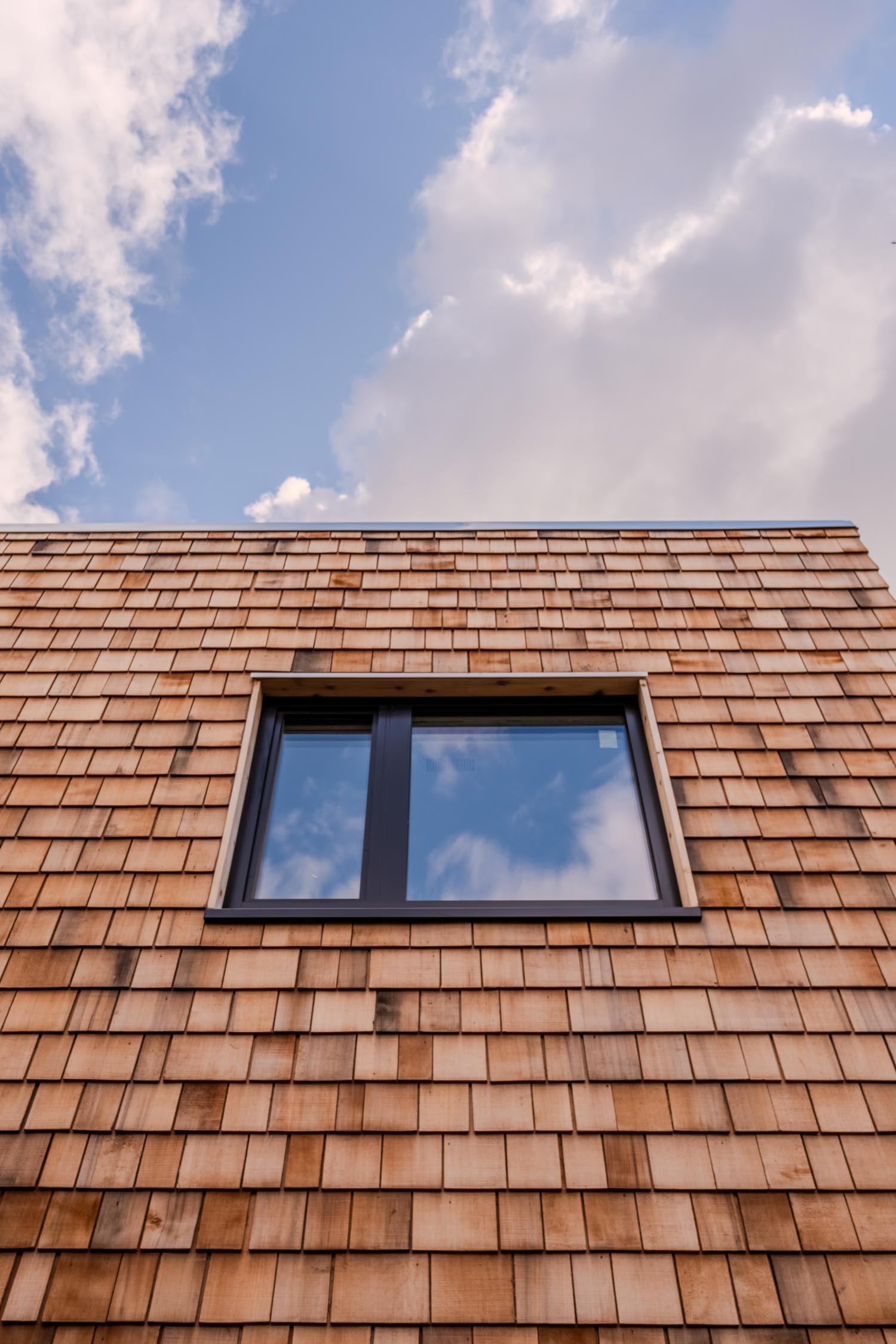
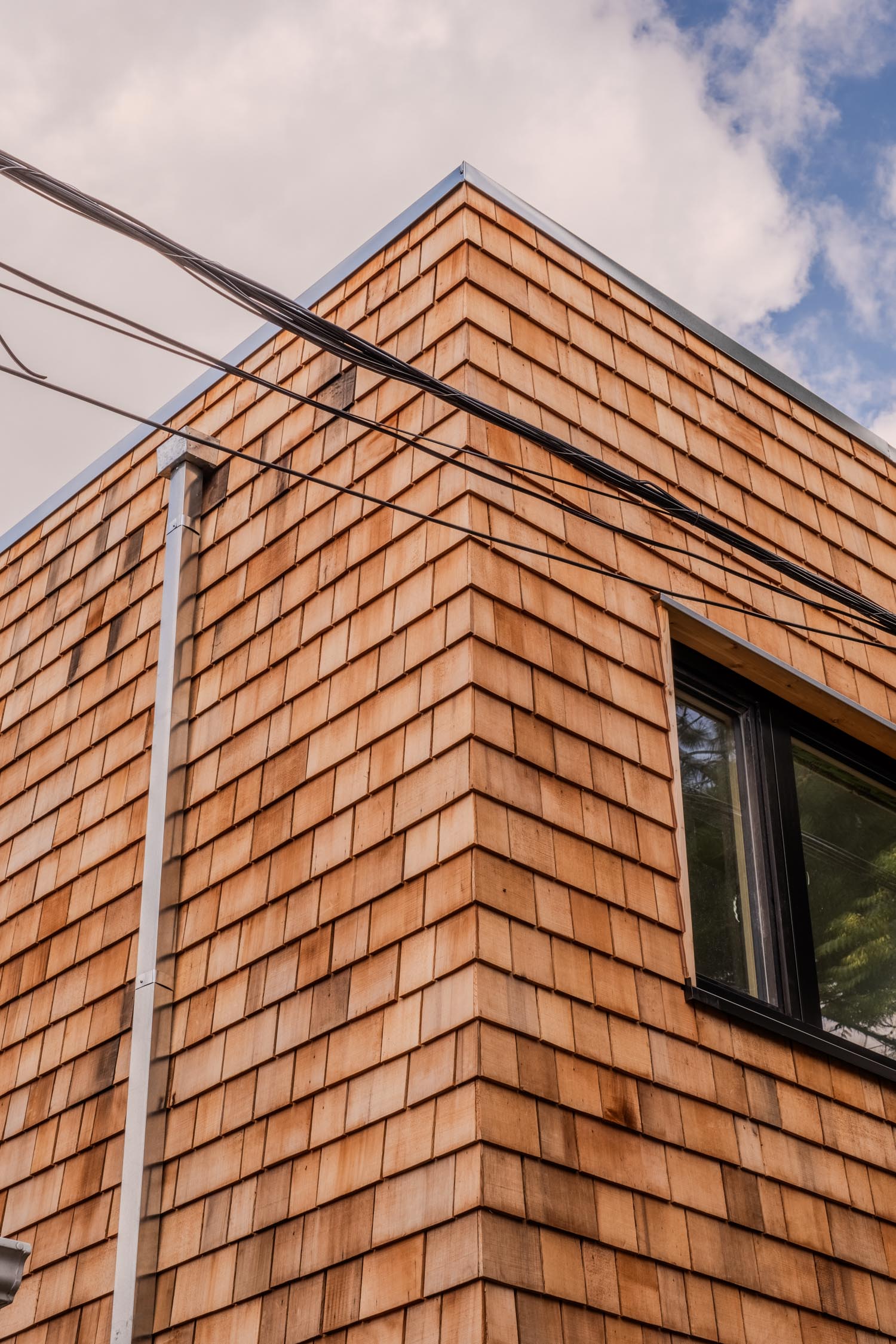
The exterior cladding features natural cedar with woven corners and meticulously aligned shingles. What challenges did this level of craftsmanship present?
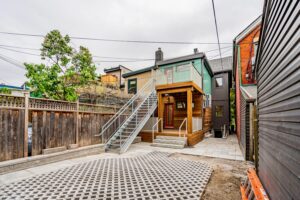
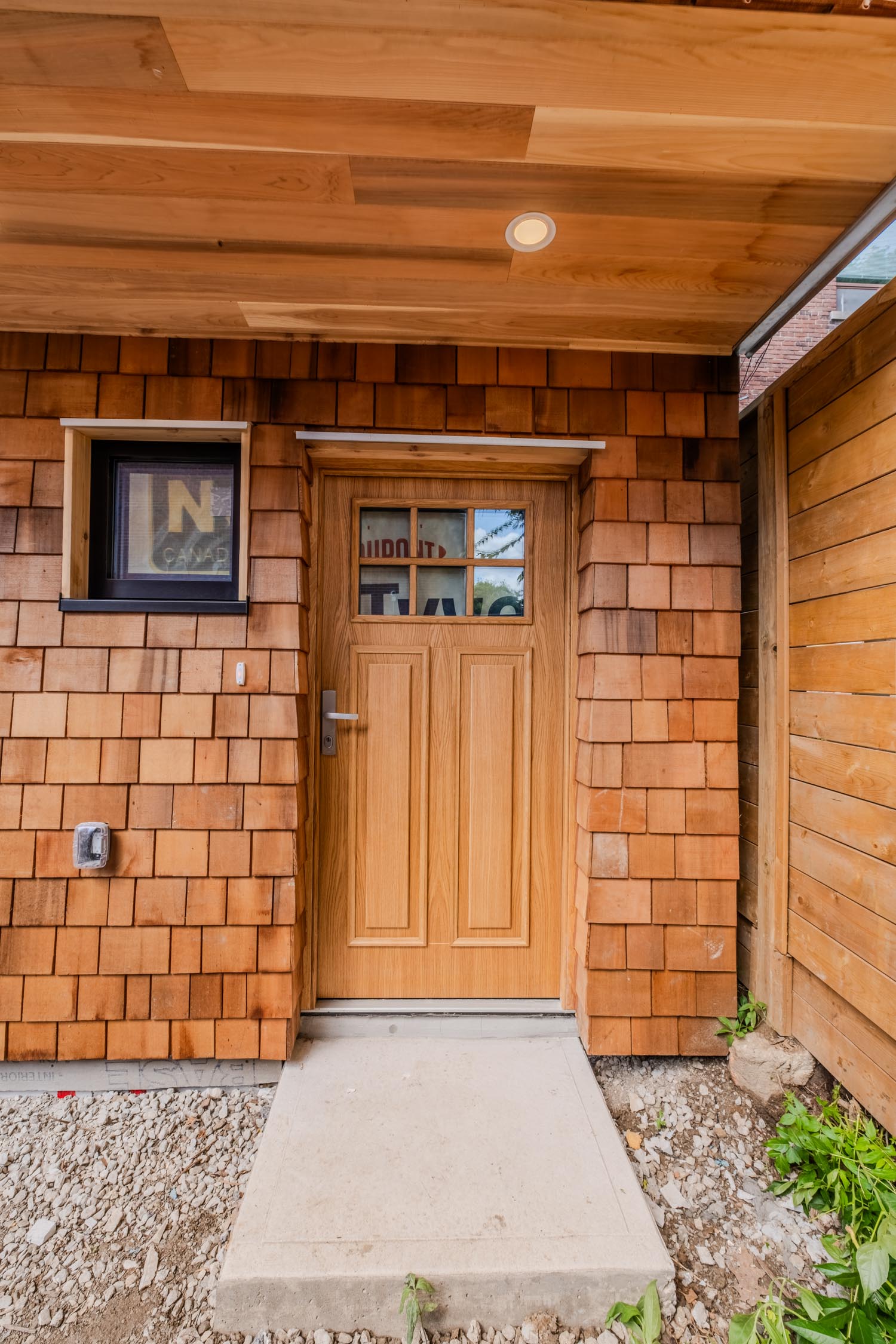
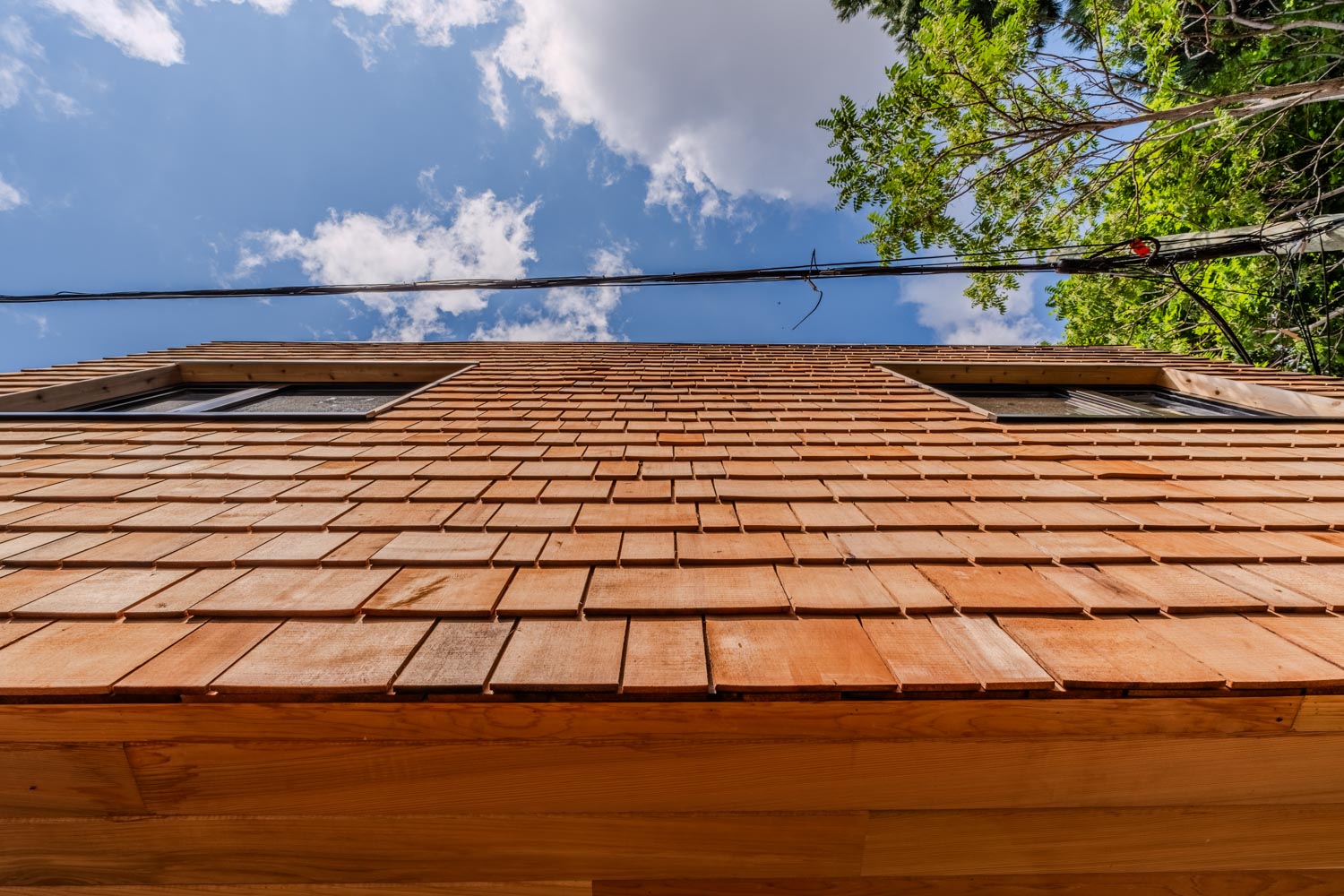
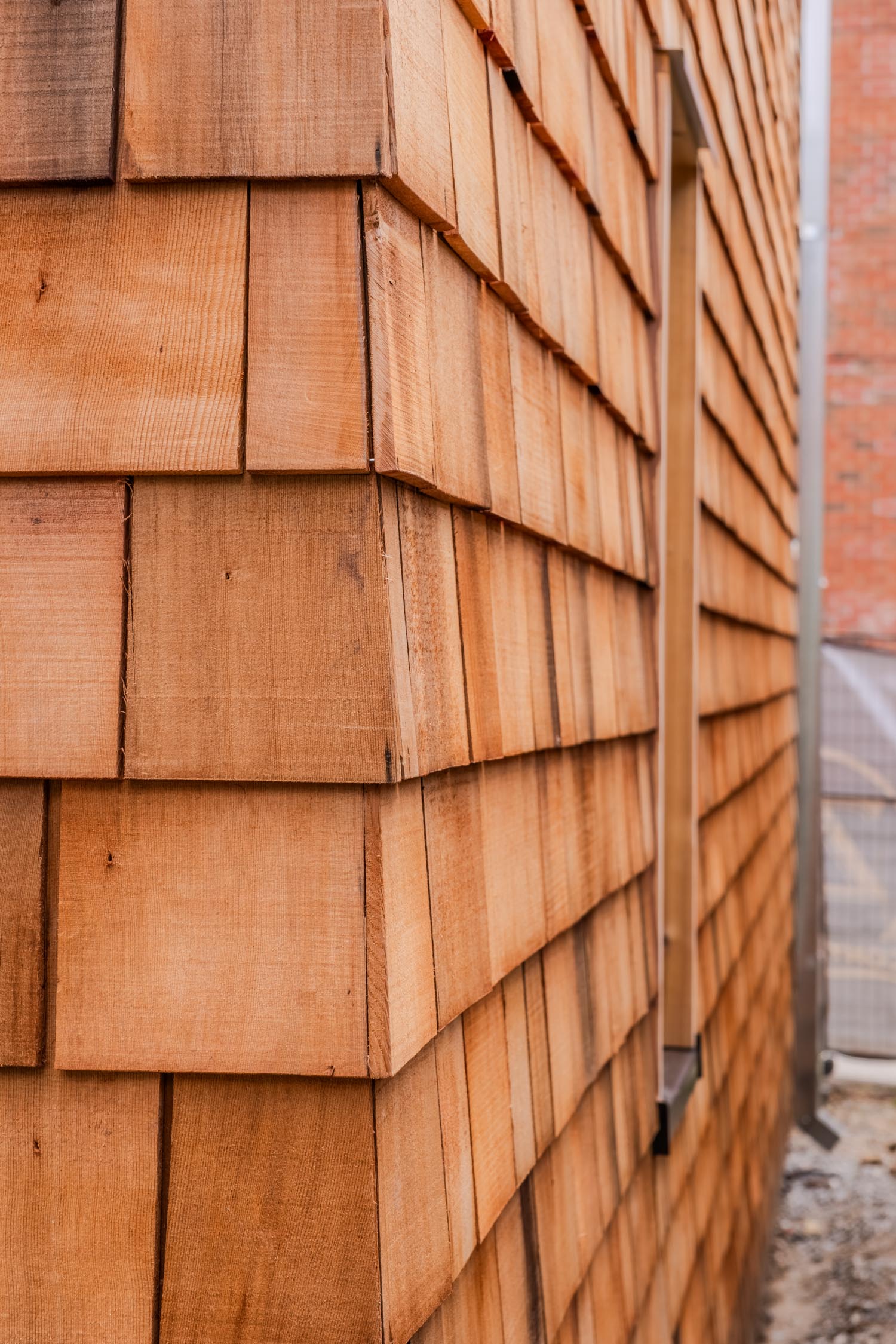
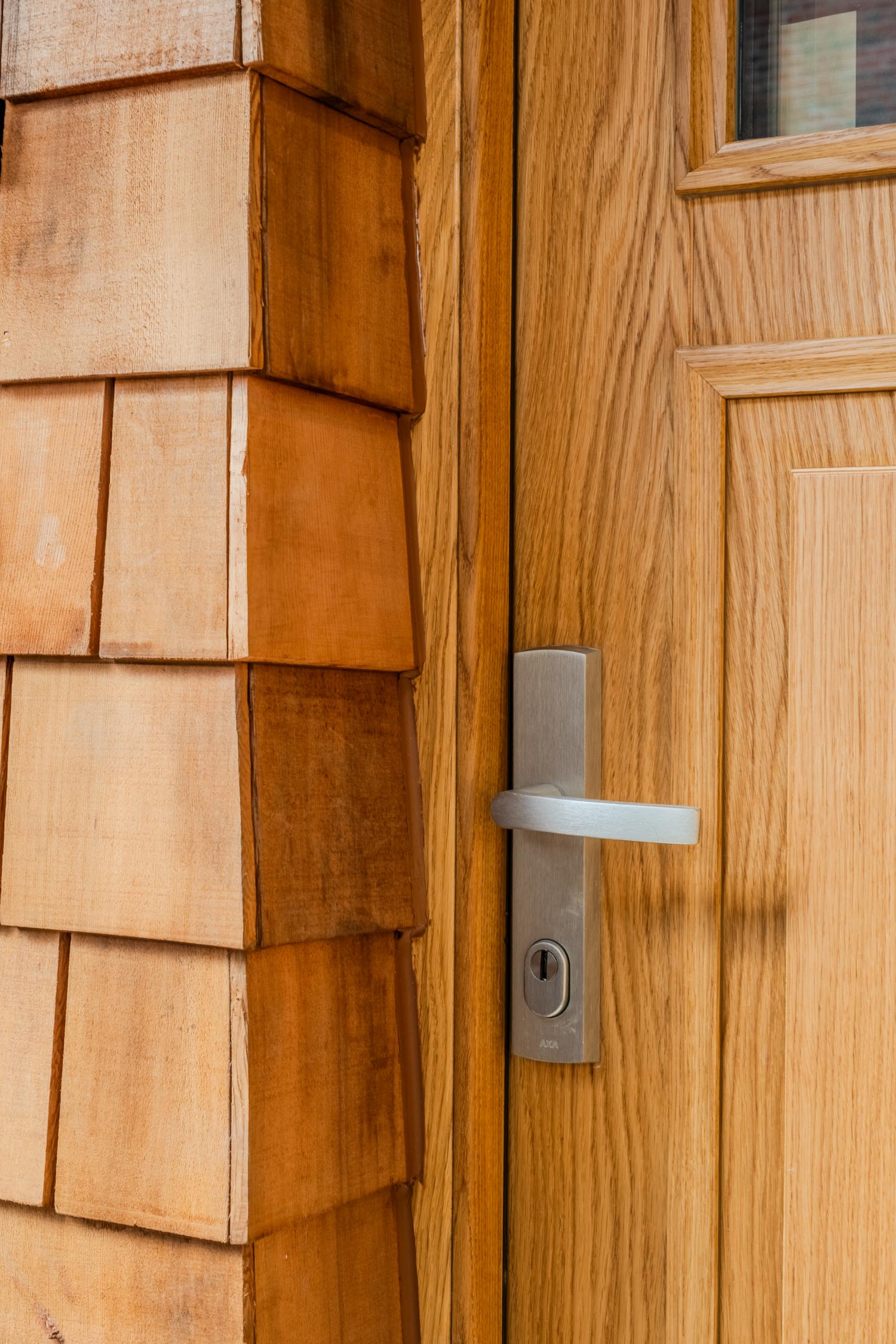
Natural cedar is a beautiful material, but it comes with challenges—mainly its responsiveness to moisture and temperature. The woven corners required each shingle to be hand-fitted, demanding both time and precision to ensure clean transitions and long-term durability.
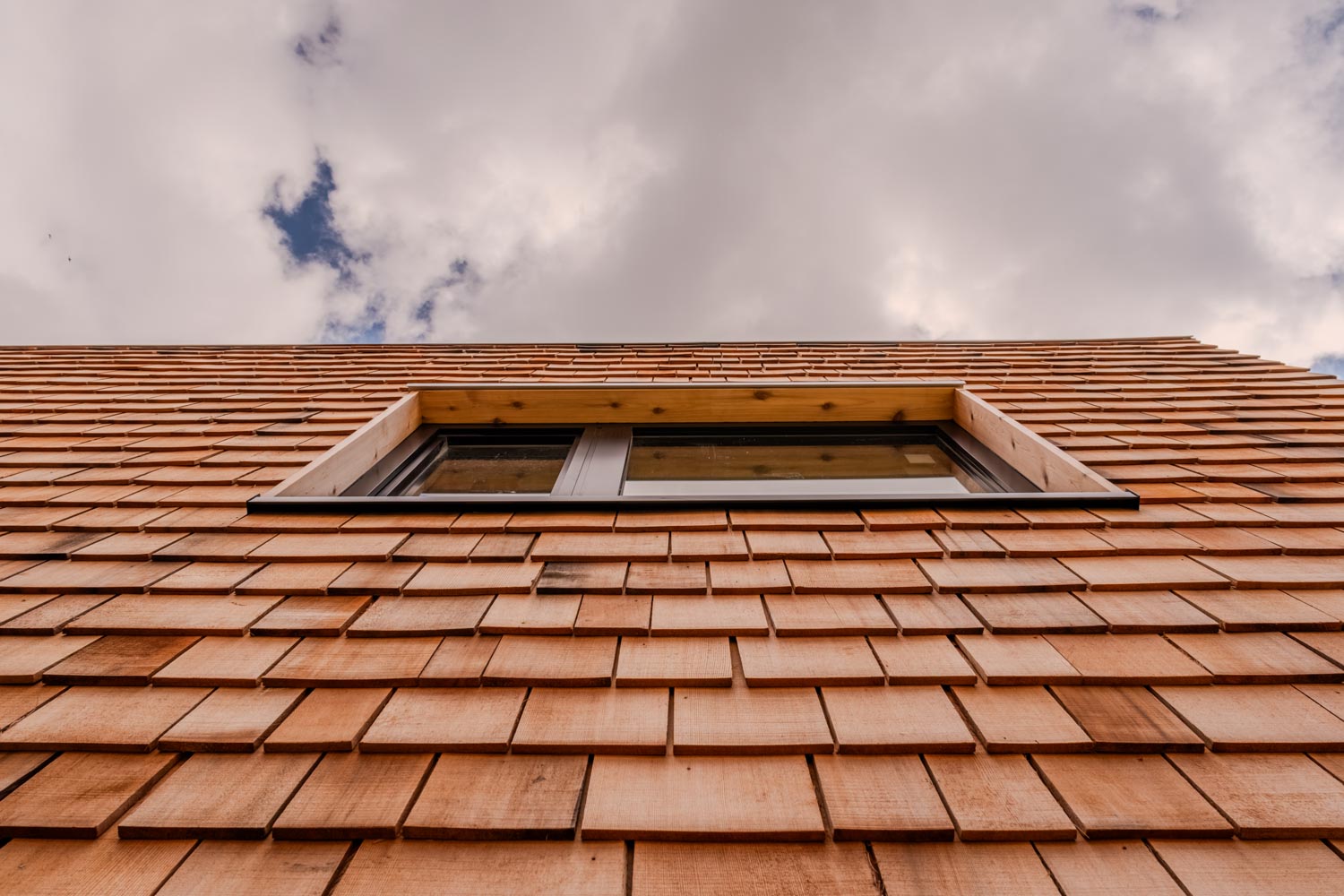
Aligning shingles perfectly around window and door openings also required precise layout and consistent attention to detail. These touches elevated the finish and reinforced the overall design integrity of the suite.

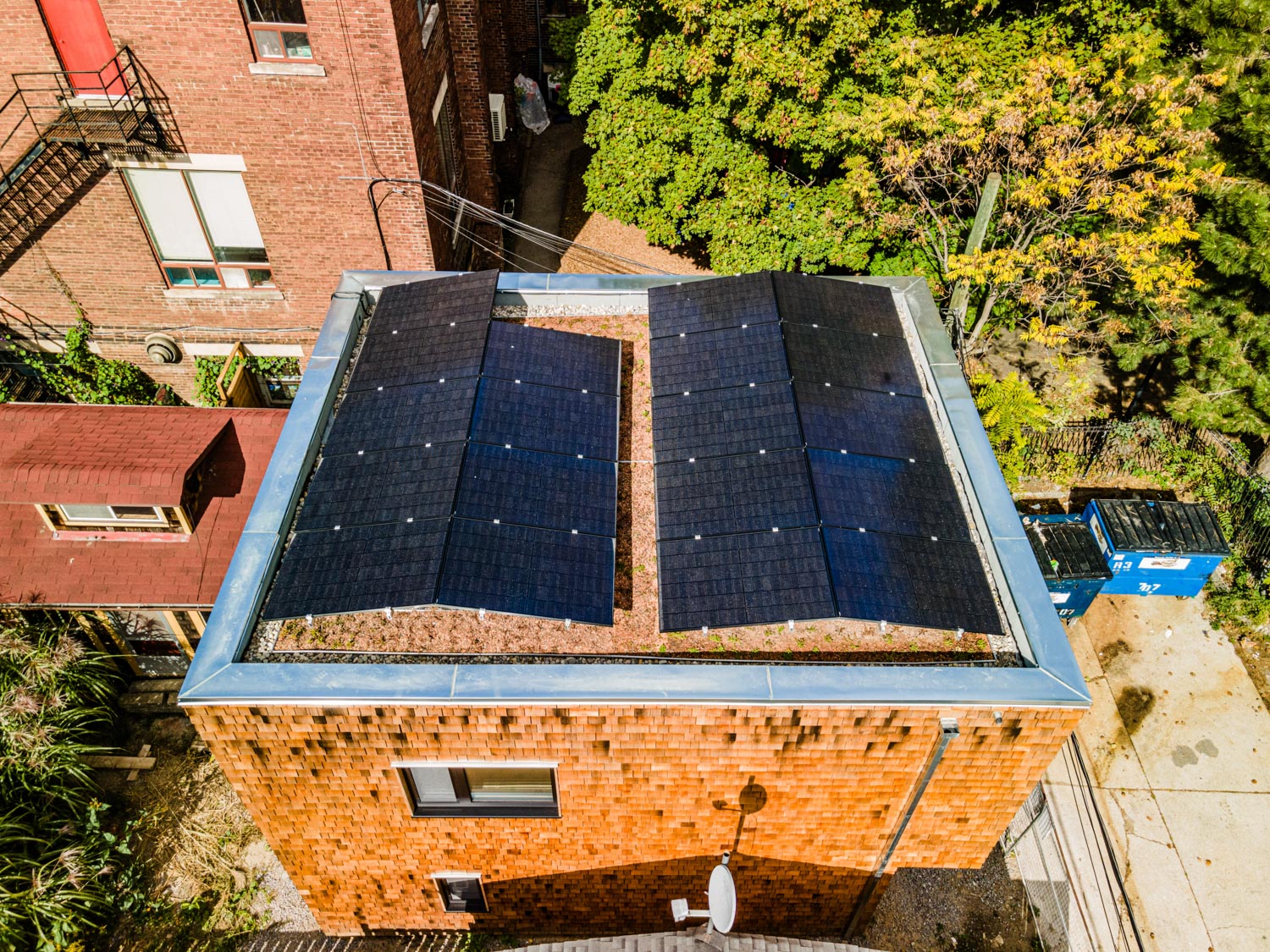
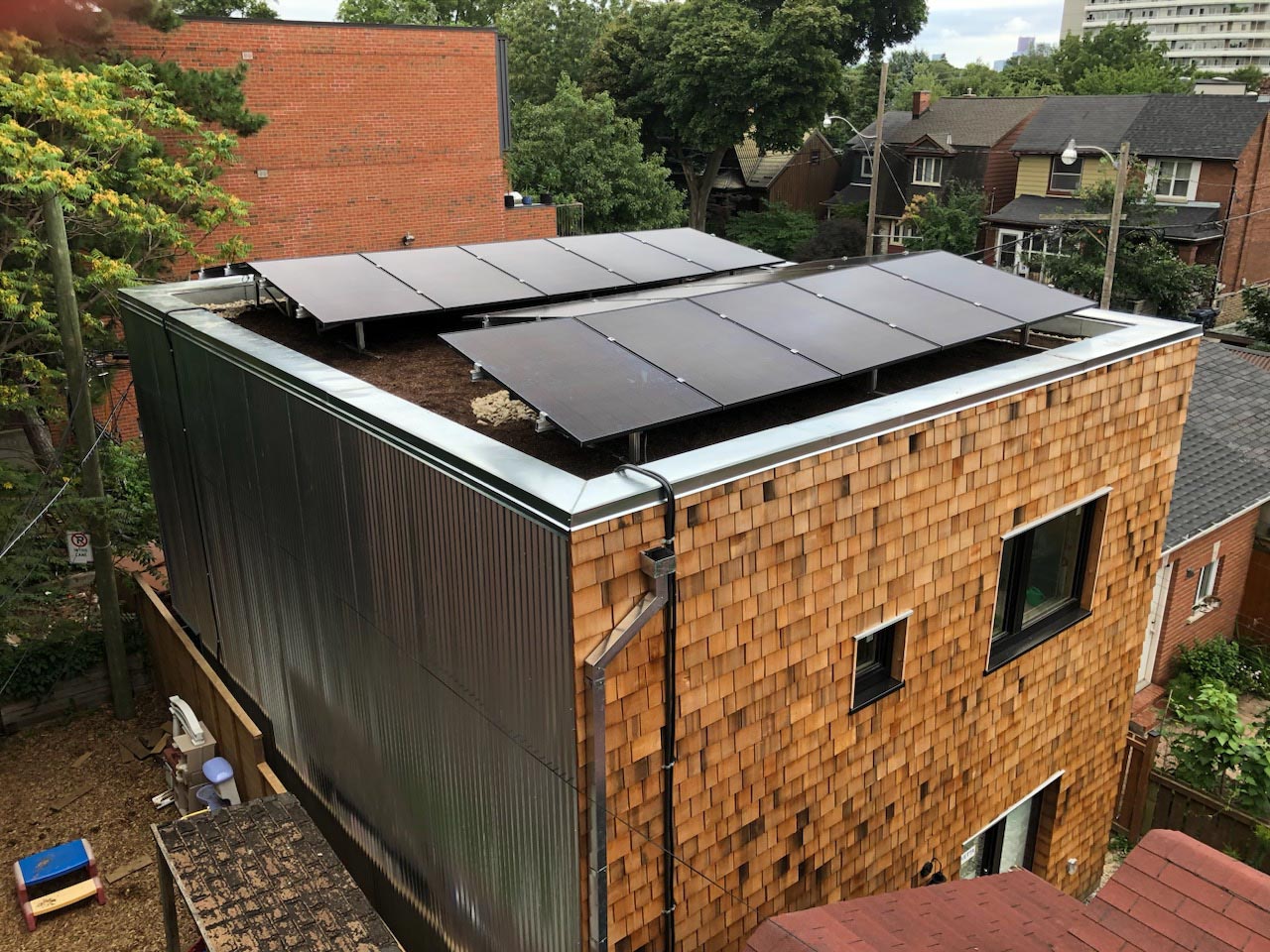
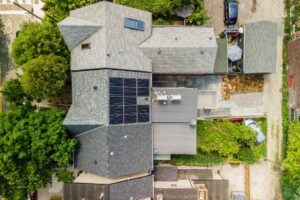
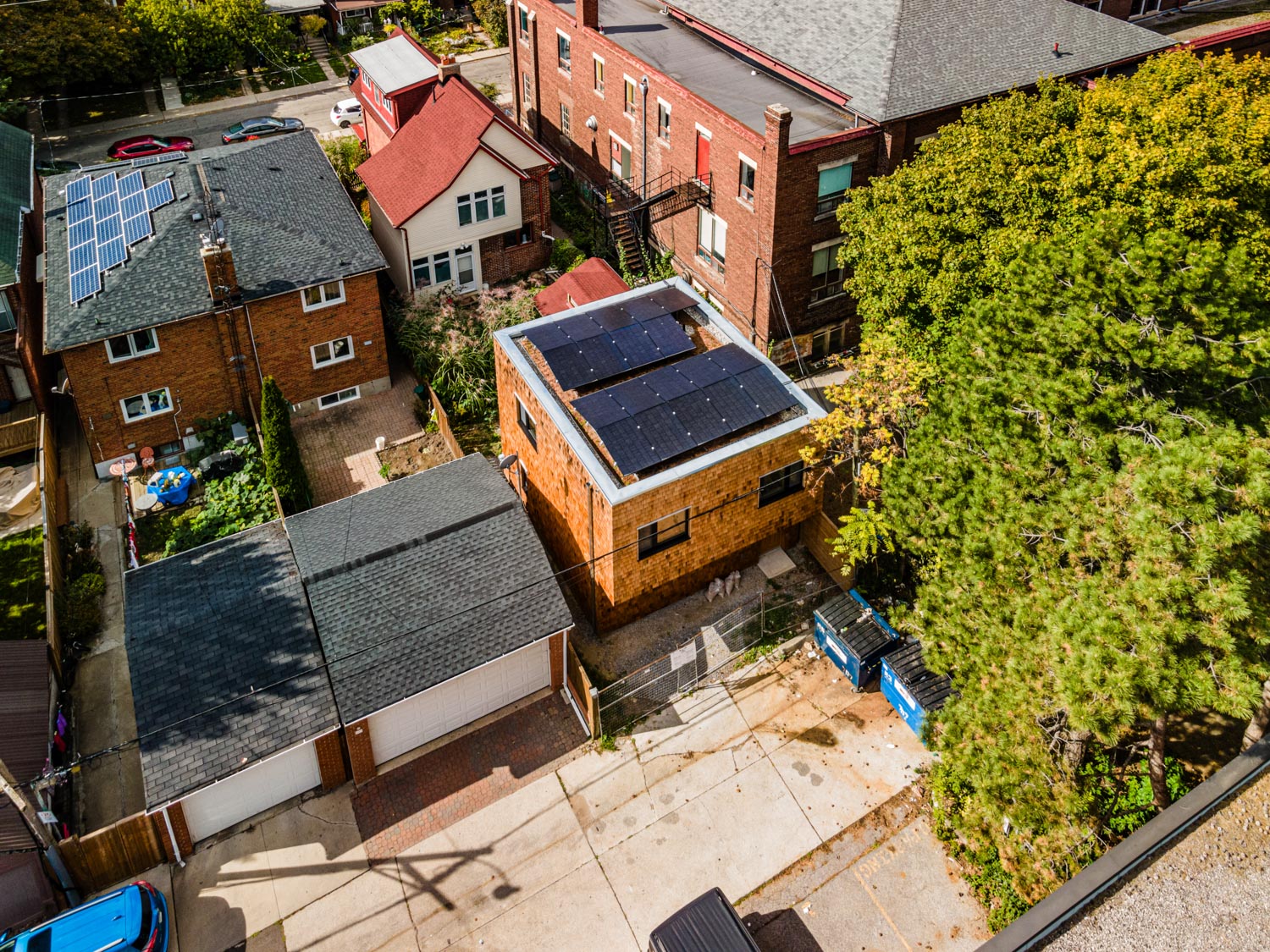
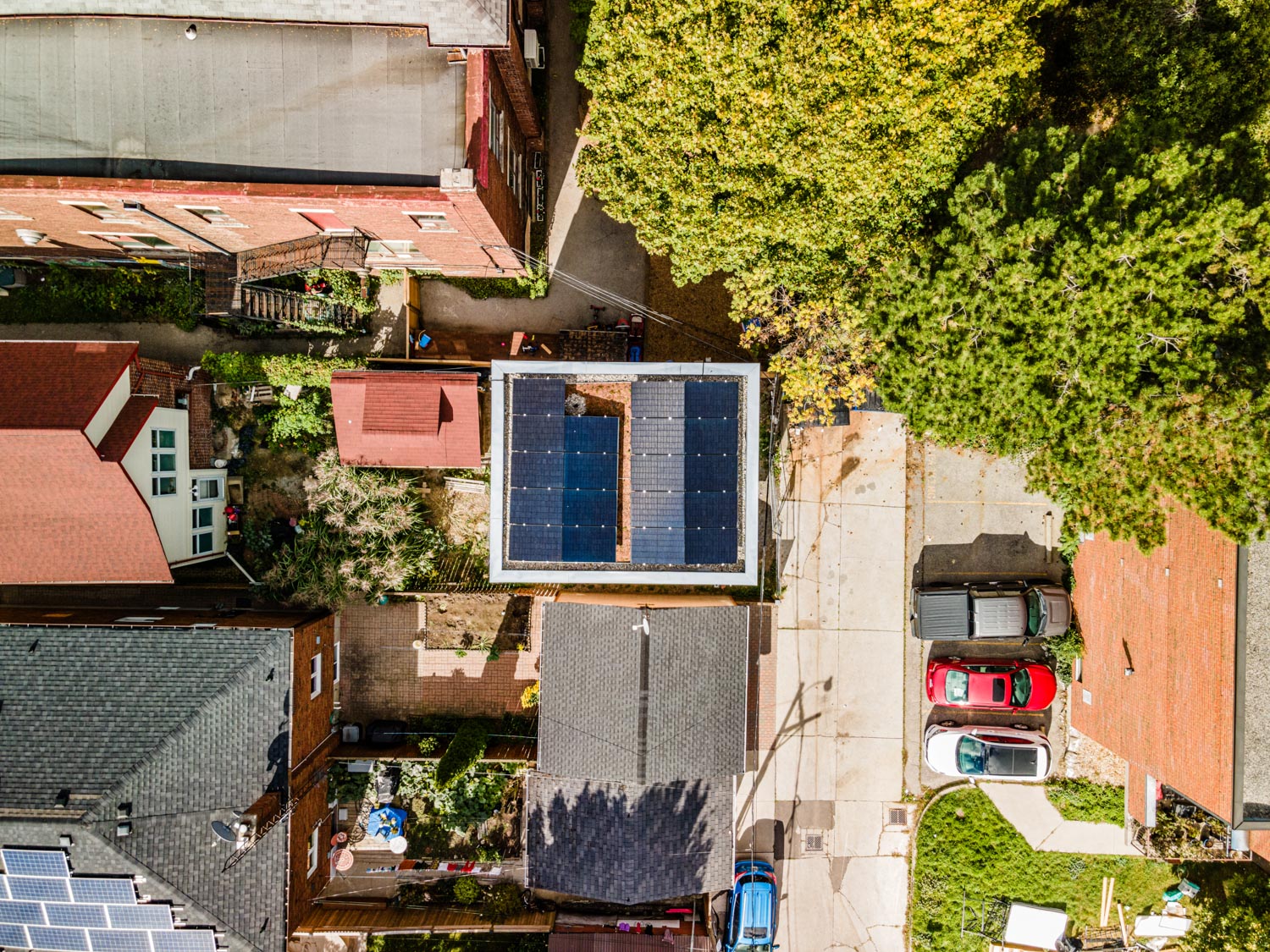
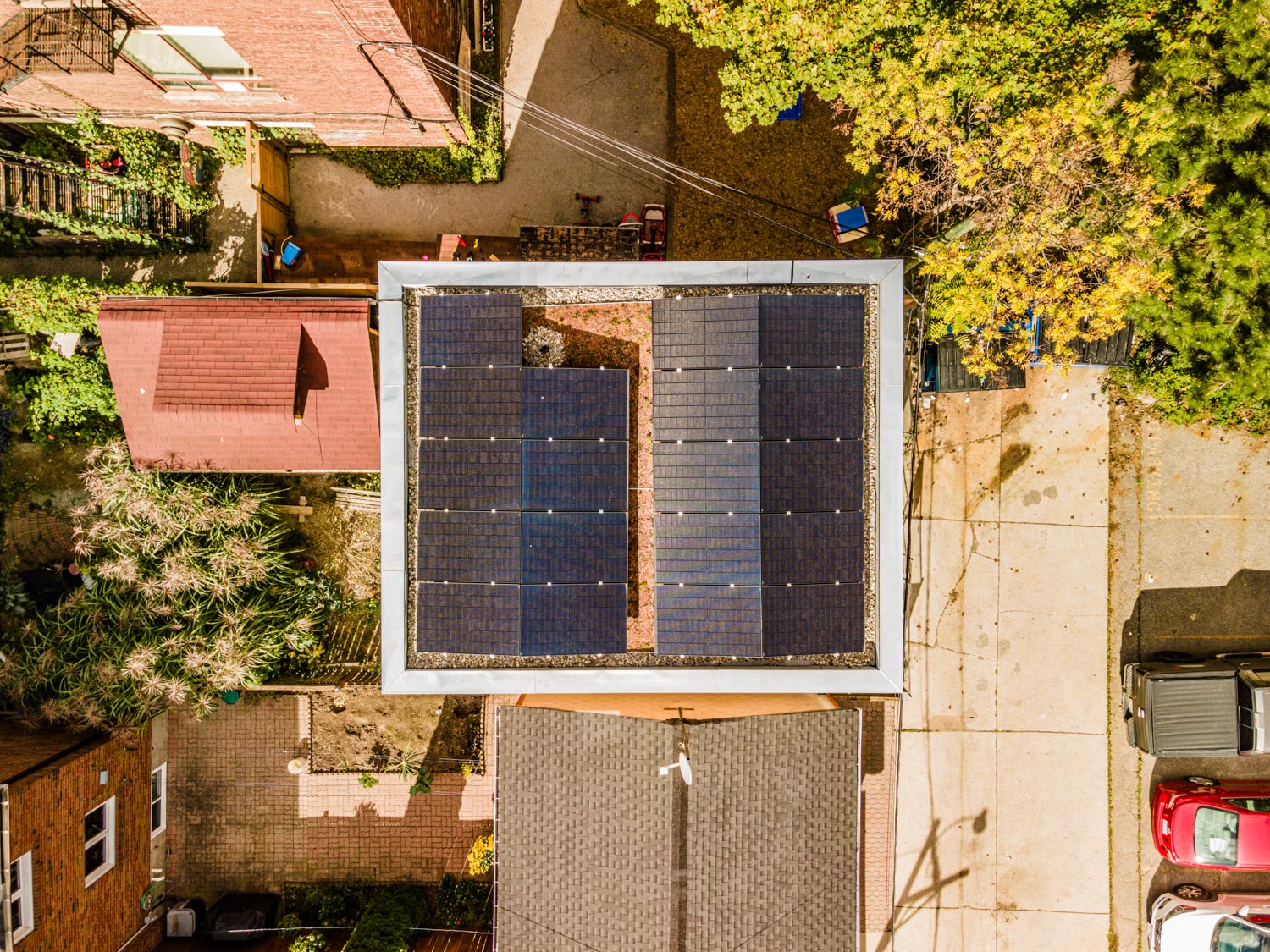
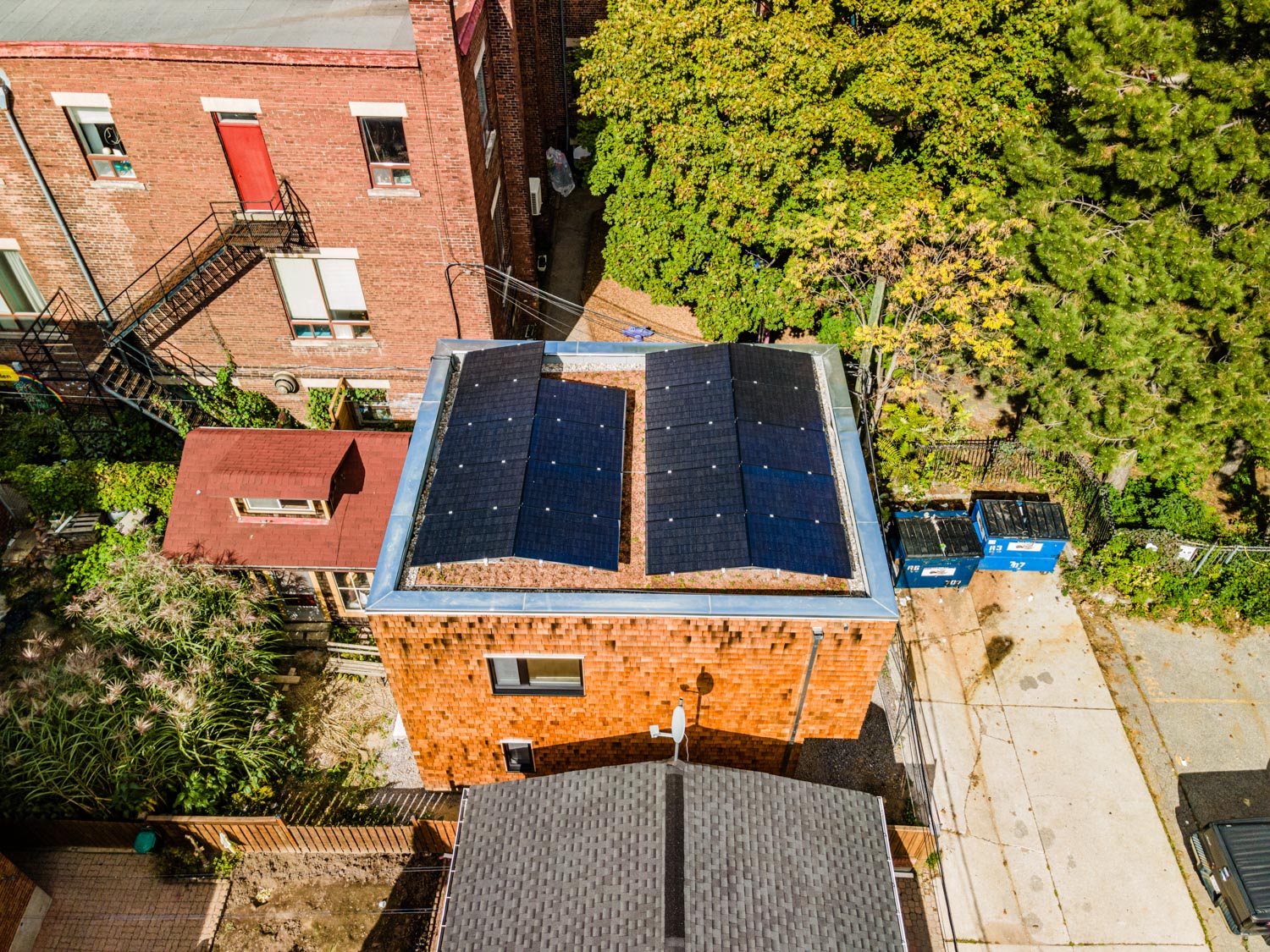
The flat roof incorporates both solar panels and a green roof. How did these elements influence the construction process?
The dual-function roof required careful structural and waterproofing strategies. Solar panels and a green roof each place unique demands on a flat roof, so we reinforced the structure to handle live and dead loads, and installed a custom drainage system to manage water runoff.
Our goal was to create synergy—using the green roof for added insulation and the solar array for on-site energy generation, together pushing the building’s performance even further.
Triple-glazed high-efficiency windows were used throughout. How did these contribute to the passive design, and were there any installation challenges?
Triple-glazed windows are essential for passive-certified homes. They drastically reduce thermal bridging and improve comfort by maintaining stable interior temperatures. However, they are significantly heavier, so careful handling and installation were key.
Airtight sealing around each unit was non-negotiable. Any weak point would compromise the envelope, so we spent time getting every frame perfect. The clear pine interiors were a bonus—adding warmth and visual continuity with the cedar cladding outside.
What are the long-term benefits of building a passive-certified garden suite like this?
The Rushton Passive Garden Suite offers long-term value in multiple ways. Operating costs are exceptionally low thanks to the airtight envelope, high insulation values, and on-site solar energy.
It’s fully electric, fossil-fuel free, and designed for durability—meaning fewer maintenance issues and greater resilience as energy standards evolve. For homeowners, it’s a future-proof investment that delivers comfort, performance, and environmental leadership in a compact footprint.