Rethinking Desert Living: A Climate-Responsive Strawbale Retreat on Yucca Mesa
Interview with Kevin Cain, owner-builder of Mesa Sky Disk, Yucca Mesa, California
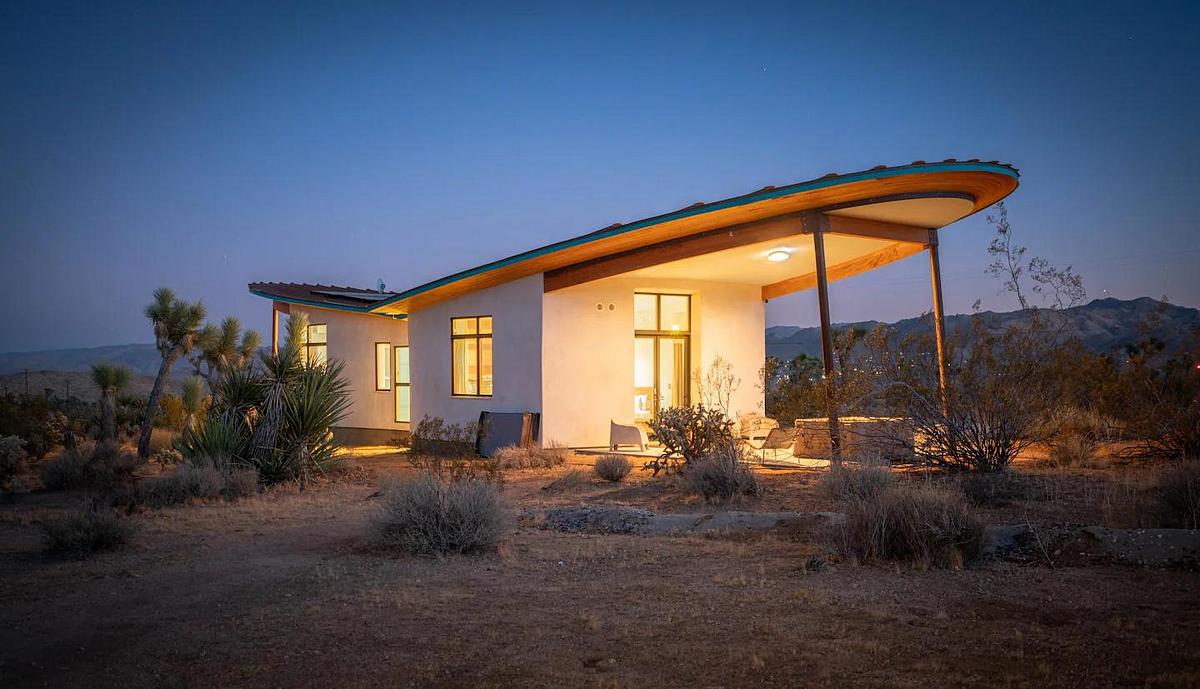
On the arid plateau of Yucca Mesa near Palm Springs, two small structures quietly model a bold response to climate, fire, and ecological fragility. Mesa Sky Disk, a personal project completed in 2025 by Kevin Cain—founder of the studio Insight Digital—is both an off-grid retreat and a full-scale test case for sustainable desert living.
The project includes a hand-built strawbale cabin and a compact guest unit known as the Ocotillo Cube, constructed in collaboration with some of the leading figures in Western green architecture and permaculture.


published with bowerbird
Developed over four years and shaped by input from figures such as Cate Leger, Karl Wanaselja, Cadmon Whitty, and CASBA (California Straw Building Association), the project interrogates conventional approaches to building in fire-prone regions and proposes a grounded alternative. In this Q&A, Cain reflects on the philosophy, methods, and collaborations that informed the project—and why he believes the desert may hold answers for California’s climate future.

Q1. Why did you choose strawbale construction for this project, and how does it respond to the wildfire threats in California?
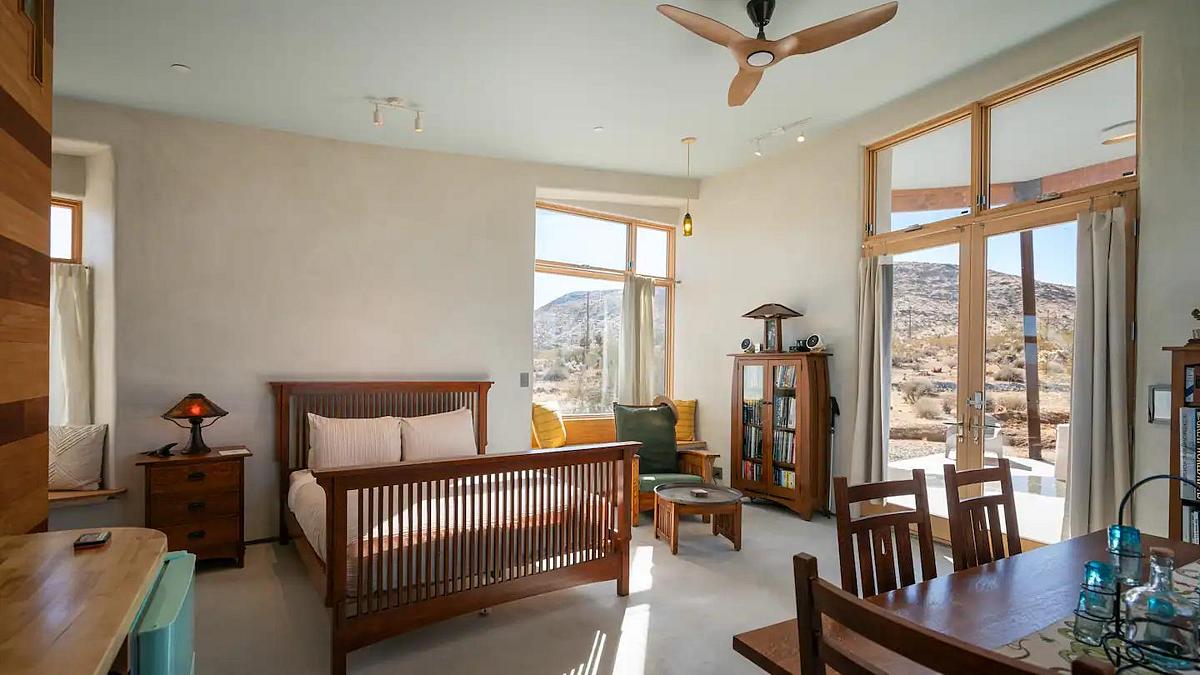
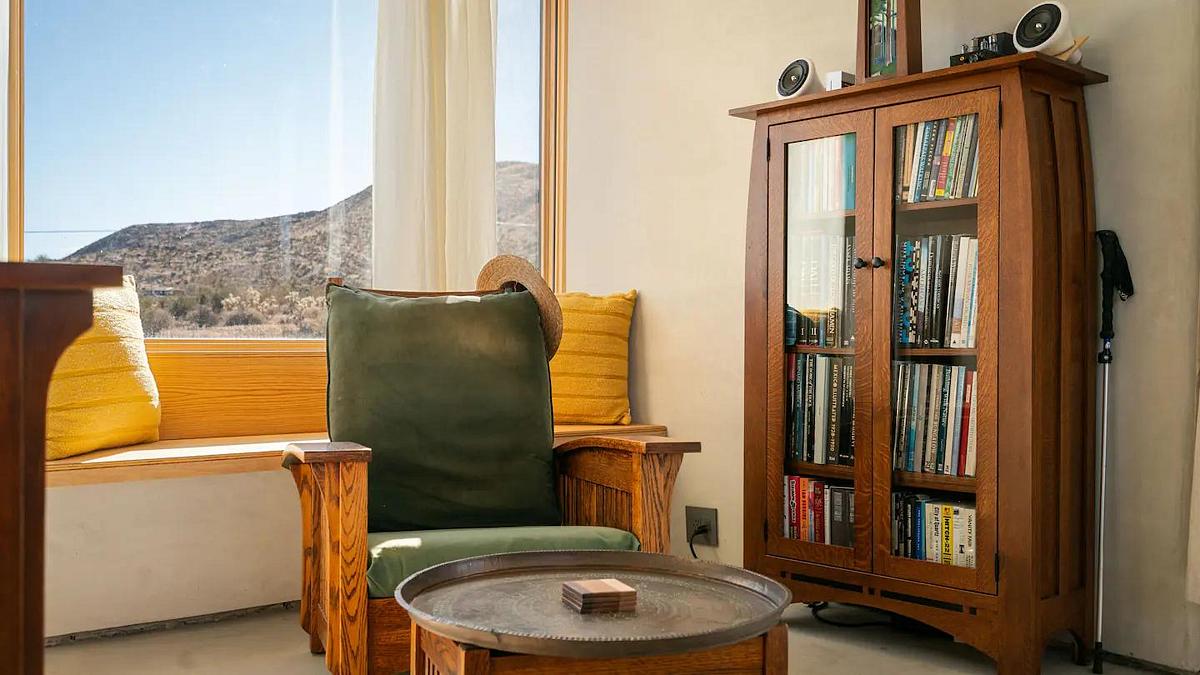
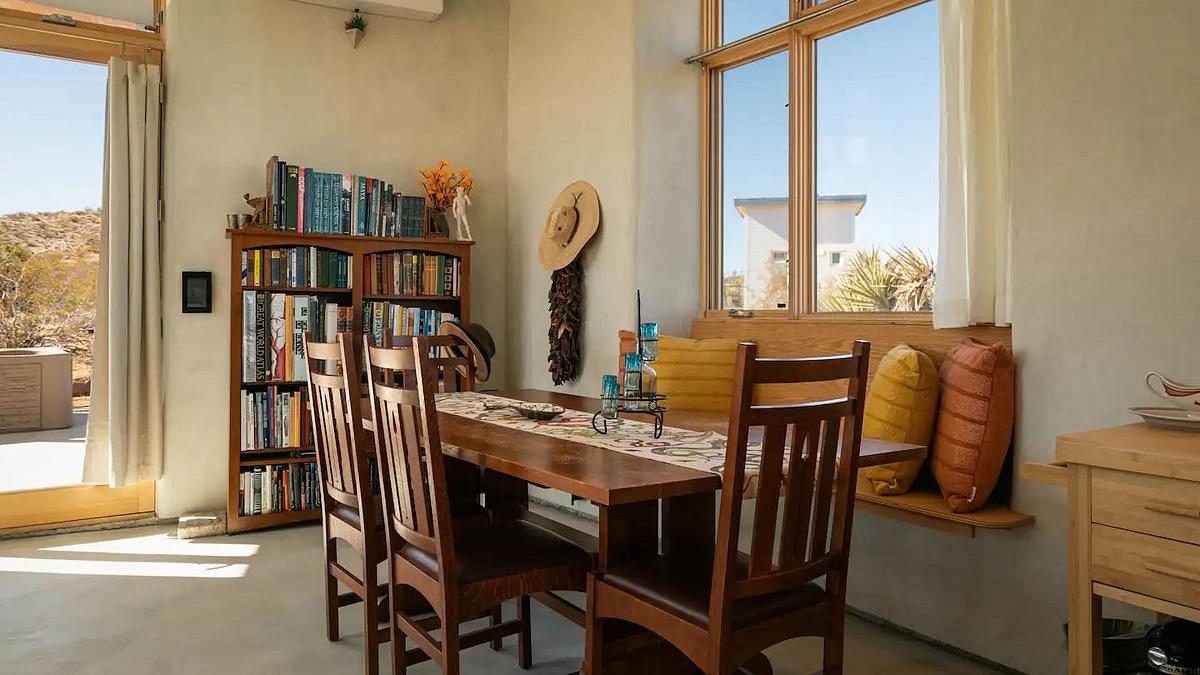
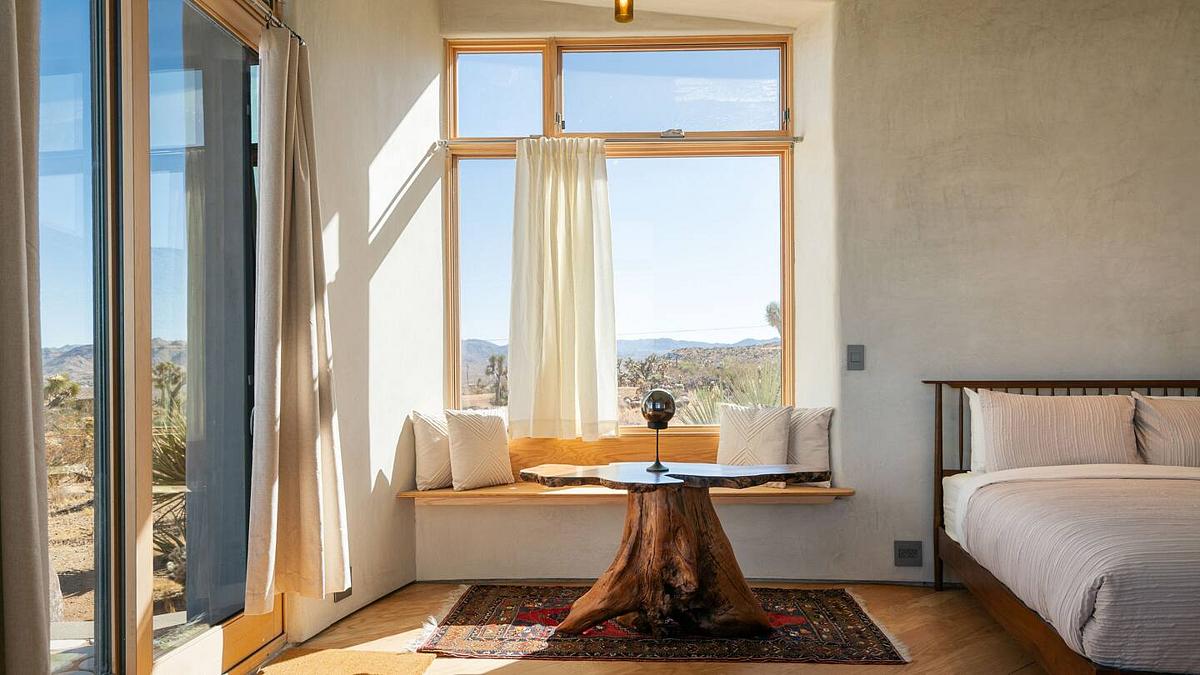
Kevin Cain: Strawbale houses are rare – but once you meet one, they win you over completely. They’re hand built, so each has a real personality. They breathe well; it feels wonderful inside. Stacking bales lends itself to curving forms that relate in interesting ways to the people within. These are, fundamentally, very human spaces. In the climate extremes of the Mojave desert, strawbale keeps humidity down during the summer monsoon and makes for a warm space in winter snow. Also, I was drawn to strawbale for its fire performance.
During California’s 2017 and 2020 wildfires, research confirms that strawbale homes held up far better than typical wood-framed buildings. That might not seem right, since of course we know straw is flammable. The barley straw we used is compressed, which limits oxygen flow. Once it’s finished with three coats of natural (and fire resistant) lime stucco inside and out the straw is encapsulated; it’s difficult to ignite even with open flames against the wall for hours. We built a standing seam metal roof to protect from embers and have neutral runoff. It’s a construction method that not only protects people but supports long-term environmental goals.


Q2. The project is described as a ‘climate lab.’ Can you expand on that idea and what makes this home unique from a sustainability perspective?
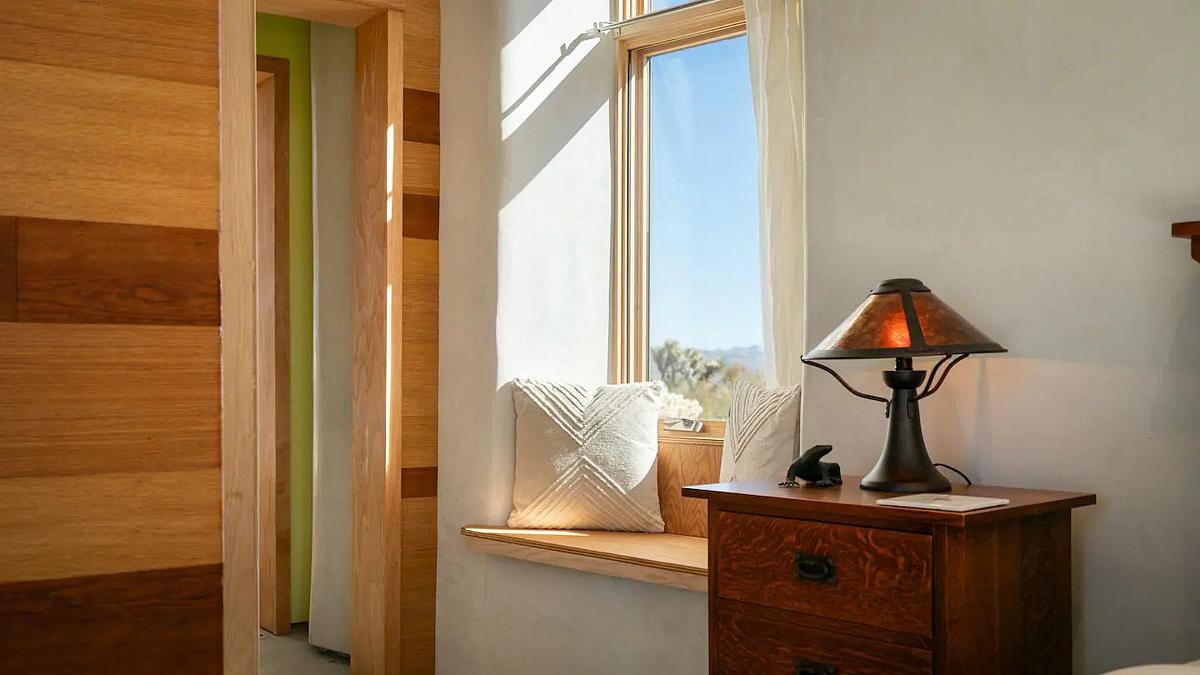
Cain: We looked at every part of the cabin as a chance to try things that our collaborators had harbored as ideas for years. By far the most experimental piece is the foundation. Our concrete foundation uses a low fly ash recipe to reduce embodied carbon, but Cate & Karl at Leger Wanaselja Architects wanted to go further. Anthony Dente at Verdant Structural Engineers worked with us to engineer a void in the stem wall. We were able to show that the concrete in the center of the rebar cage does not add meaningfully to our footing’s strength; by removing the mass we further reduced the carbon footprint and we then used the space to sequester many tons of landfill from a local junk yard —everything from car radios and VHS tapes to broken machinery—inside concrete. It’s a way to lower embodied carbon while removing non-recyclables from circulation. The architects joined in to collect this infill, choosing items that cannot be reused or that do harm to the environment as they disintegrate in the elements – but are not reactive and therefore can be encapsulated in concrete safely. This building is the first we know of to engineer this approach into the foundation design.
We also excluded toxic chemicals across the board: we used redwood rather than pressure treated lumber, we have no OSB or other manufactured materials that can offgas into the indoor spaces. Our strawbale walls use naturally hydraulic plaster with none of the usual chemical additions in stucco, and this kind of construction does not need any plastic vapor barriers. We were also serious about reducing the documented waste stream from the building. We pushed to find ecological ways to make a building that’s also fully seismic compliant, functional, and beautiful.
Q3. What role did the natural site play in shaping the design and footprint of the cabin?
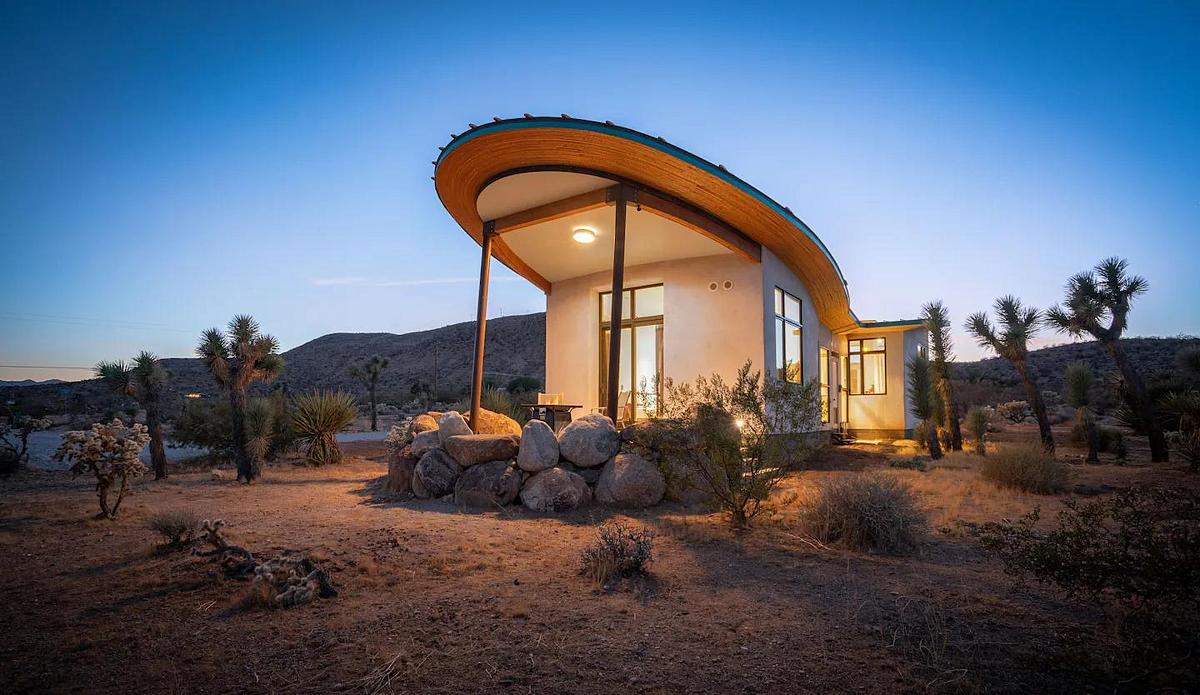
Cain: The design was dictated by the land. We chose a 70-square-metre footprint—the minimum allowed by local code—to minimise disruption. No plants were dug up; only one creosote was moved. We designed the cabin around a grove of Joshua Trees. Grading was done by hand, and we worked around all the existing species: cholla, creosote, jojoba, and many others. This area has species like blackbrush that can live for more than a thousand years. ‘King Clone’, a creosote ring that is the oldest known living thing on our planet, is just a few miles away from us. We didn’t want to impose a building—we did not want to disrupt existing wildlife corridors.


Q4. The elliptical walls and butterfly roof give the house a distinct organic form. What was the rationale behind the curves and natural geometries?
Cain: As much as it’s about structure, it’s also about how space makes people feel, especially in a wilderness site like this. When you let your eye meander over curves in a built space, it selectively activates an emotional reward response in the brain. Interestingly, rectilinear spaces do not. Researchers have shown that curving building plans can promote calmness, safety, and relaxation. Our cabin plan is formed by intersecting ellipses, which you see in the walls and the butterfly roof. I feel they soften the experience of being indoors when you look out into the wilderness. And, from outside, the sloping roof and curving walls mirror the horizon ranges in our landscape.


Q5. Tell us about the Ocotillo Cube. How does it contrast with the strawbale cabin, and what does it contribute to the site overall?
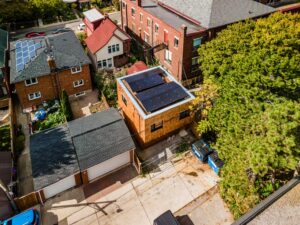
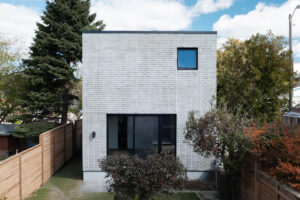
Cain: The Ocotillo Cube footprint is about 16 square meters—a smaller, modular counterpoint to the curving strawbale cabin. It’s made from prefabricated SIPs and steel framing, based on Ian Kent’s NOMAD Micro Homes design. It’s orthogonal and compact, which contrasts with the more organic forms of the main house. It’s really a cube: the walls and roof are about 4m square. Still, it’s quite spacious.
The sleeping loft has plenty of room for a queen bed, and big windows let in a lot of light. It runs on PV solar and has rainwater catchment, atmospheric water generation, and a pretty fancy bioremediation system for wastewater. It demonstrates a different kind of sustainability. Our strawbale cabin leans into natural materials, and the cube leans into synthetic, hybrid materials. Together, the two structures show that diverse approaches can still have consistent ends. Also, both are small enough that there is intrinsic energy savings in each.

Q6. As founder of Insight Digital, how did your studio’s philosophy shape the approach to design, construction, and communication on this project?
Cain: INSIGHT has worked for more than thirty years in archaeology. Working in rural southern Egypt I’ve been struck by the extraordinary work of architects like Hassan Fathy. What they do is deeply connected with the site, and the buildings are built from the local earth. There’s a lot we can learn from that approach. I feel the same about our work at Mesa Verde in Colorado, which has some of the best-preserved Ancestral Puebloan ancestral sites in the United States. Again, the lesson is clearly that ‘ecological’ spaces can be functional, even majestic. It’s a learning process of the kinds that Stewart Brand writes about in How Buildings Learn. Our cabin is designed to be felt, not just seen.
We rent the cabin as a form of direct communication: I would like it if people can use our little example as a springboard to examine the larger picture of the climate future we all share.

Q7. The project involved collaboration with several leading figures in green architecture and permaculture. What did those partnerships bring to the work?
Cain: Our guiding light was the architect Zach Stewart, who pushed California to expand the residential code to allow experimental single-story owner/builder projects. Zach has been cheering for us; what we did is very much in his mold and would not be permitted without his work. Ours is the first strawbale building in the town of Yucca Valley, but strawbale in the West owes a debt to Janet and George Johnson, Eva Soltes, Cadmon Whitty , Nicholas Holmes, and California Straw Building Association. We were lucky to work with them all; there is no way we could have completed the building without them. It is only through the work of many others that strawbale is permitted in California’s residential code at all.

Q8. Beyond architecture, how do you see this project engaging with broader social or ecological conversations in the region?
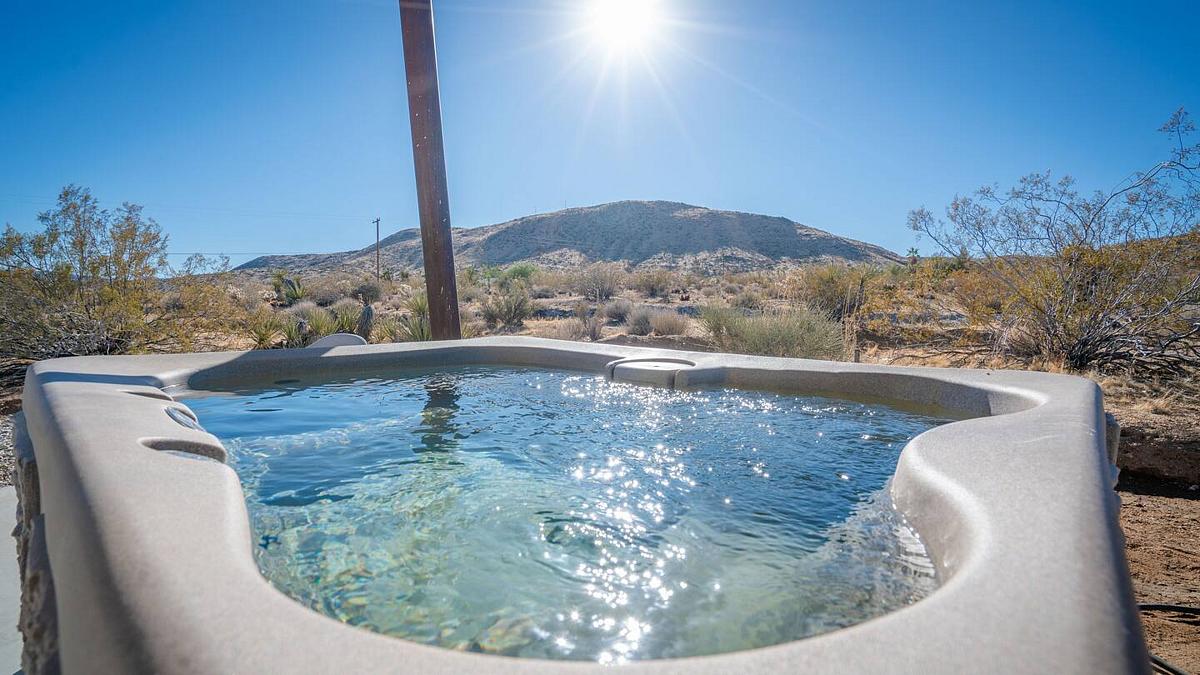
Cain: The high desert is changing. With twenty million people pressed for room in greater Los Angeles, the Joshua Tree area is growing quickly. Historically, people have brought the usual suburban stick-built ethos from the coast to the desert, where the climate is significantly different. Mesa Sky Disk is an attempt to try to accommodate the landscape, and its actual climate. We’re trying to show that small, ecologically rooted, locally adapted design is not only possible, but increasingly necessary. There’s no single solution, of course. We need lots of ideas. I hope that every experiment helps us ask better questions. That’s the role I see for this project in the wider conversation about the desert and its future.
More information
Bookings, video and photography available at: https://skydisk.shop
Photography by Kevin Cain, staycocoon.com
Owner Builder Contact: Kevin Cain – [email protected]