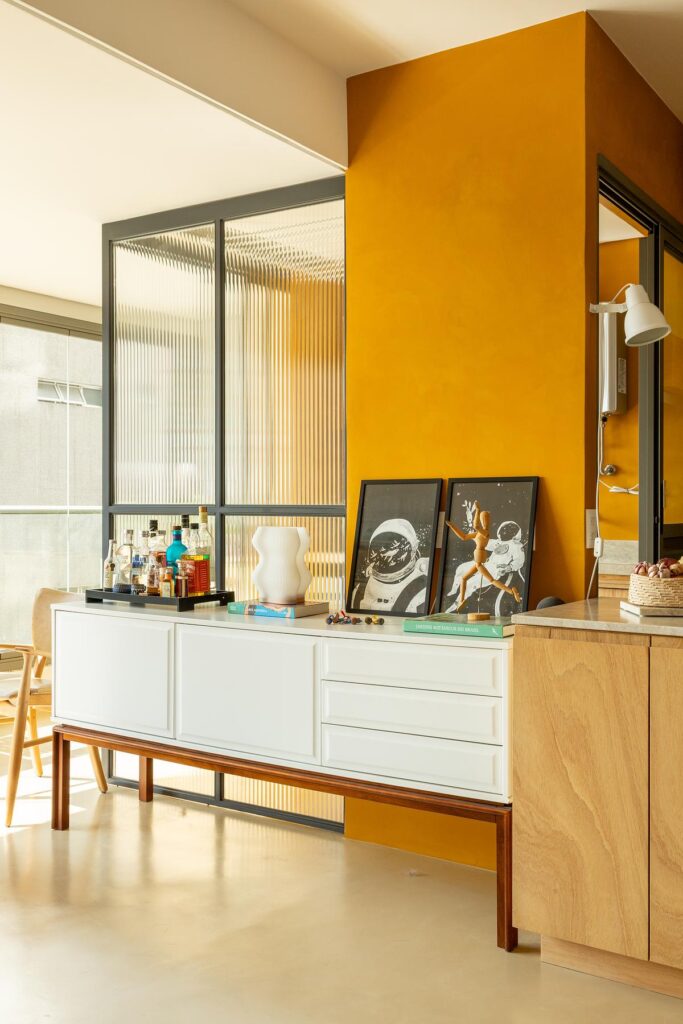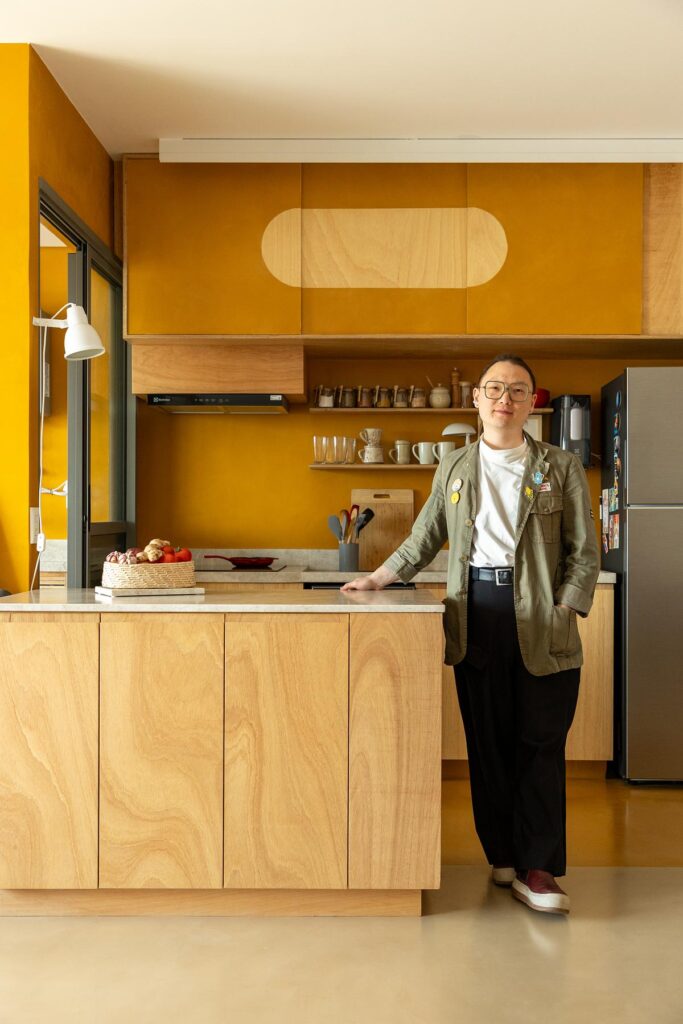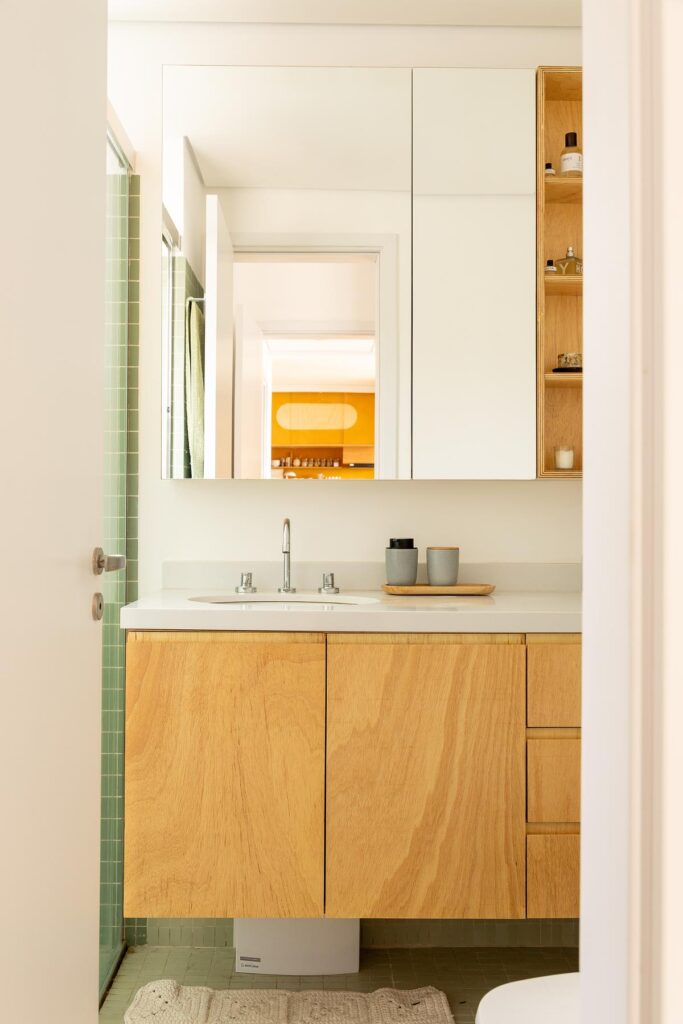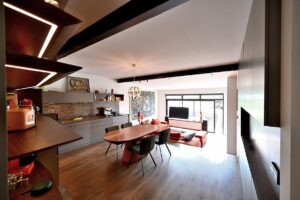
Sliding Puzzle Apartment — designed by Bruno Kim Arquitetura, Centro, São Paulo, BR
In a city where new residential developments often follow the same formula, this compact apartment stands apart. Designed by Bruno Kim Arquitetura, the Sliding Puzzle Apartment transforms a standard off-plan unit into a home that feels personal, fluid, and joyful. The renovation opens up living spaces, uses bold material and color choices, and integrates playful elements into everyday life — all while improving natural light, ventilation, and circulation. We spoke with the architect about the thinking behind the project.
photography by Leila Veigas, published with bowerbird
for more compact apartment schemes on tinyhousezine
São Paulo’s new developments often feel generic and rigid — what personal or spatial values did you want to bring into this apartment to challenge that standard?
We believe that space always reflects and translates the dynamics of the people who inhabit it. In that sense, the generic, rigid, conflicted, and often chaotic urban landscape we see emerging in São Paulo is just an expression of its inhabitants as a society. New buildings reflect a lack of shared understanding or agreement on what paulistanos are as a group and as a culture — even though there is a lot of individual diversity.
As a result, when the city lacks diversity in its built landscape, it becomes even more urgent for each person or family to live in a home that truly reflects their beliefs, tastes, and way of life. The challenge with this apartment — and something that reflects our broader approach to architecture — was to address within a single unit the very qualities we feel are missing in the city at large.
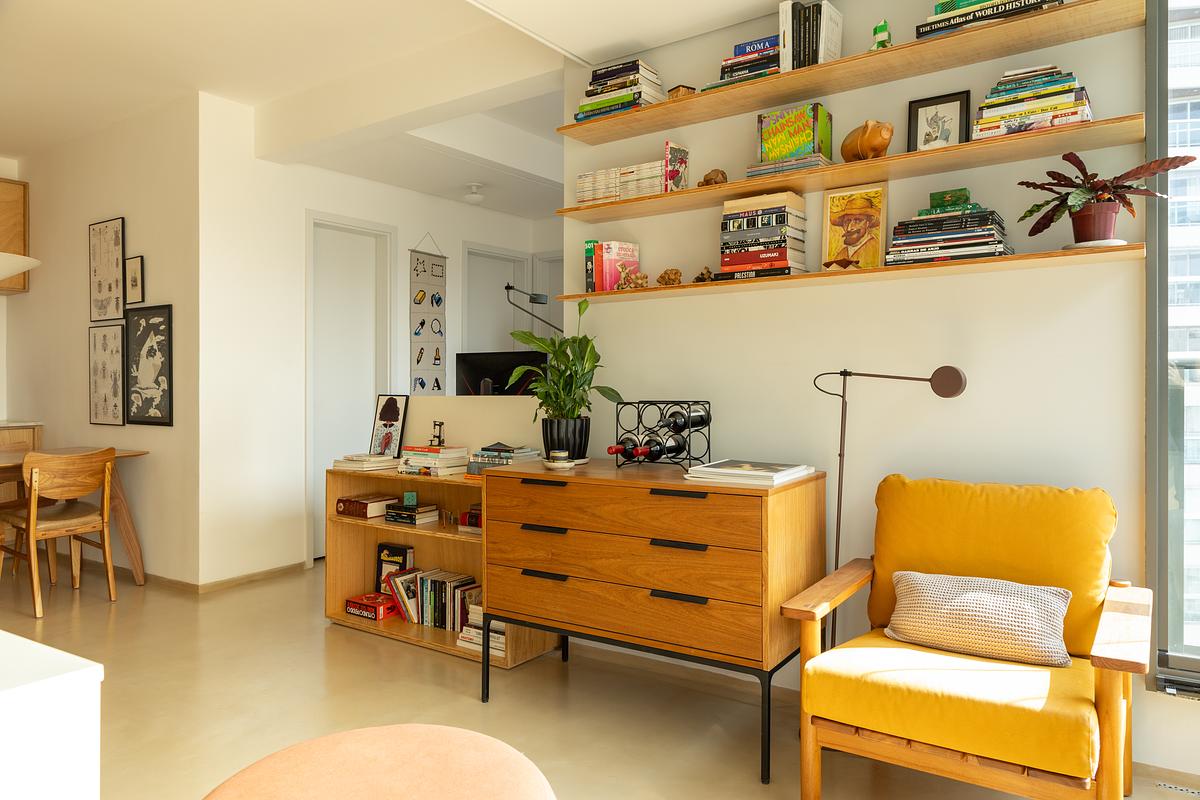
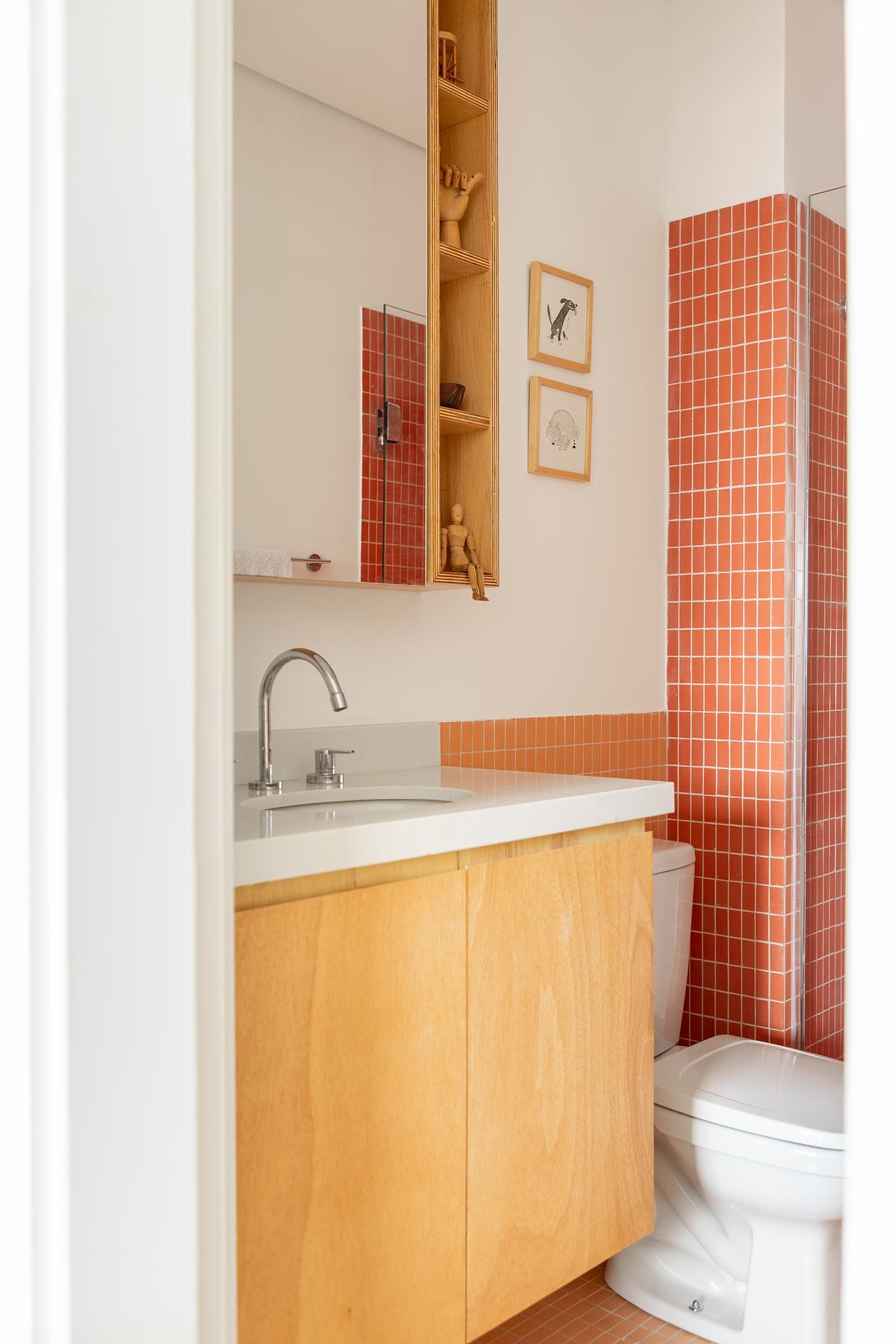
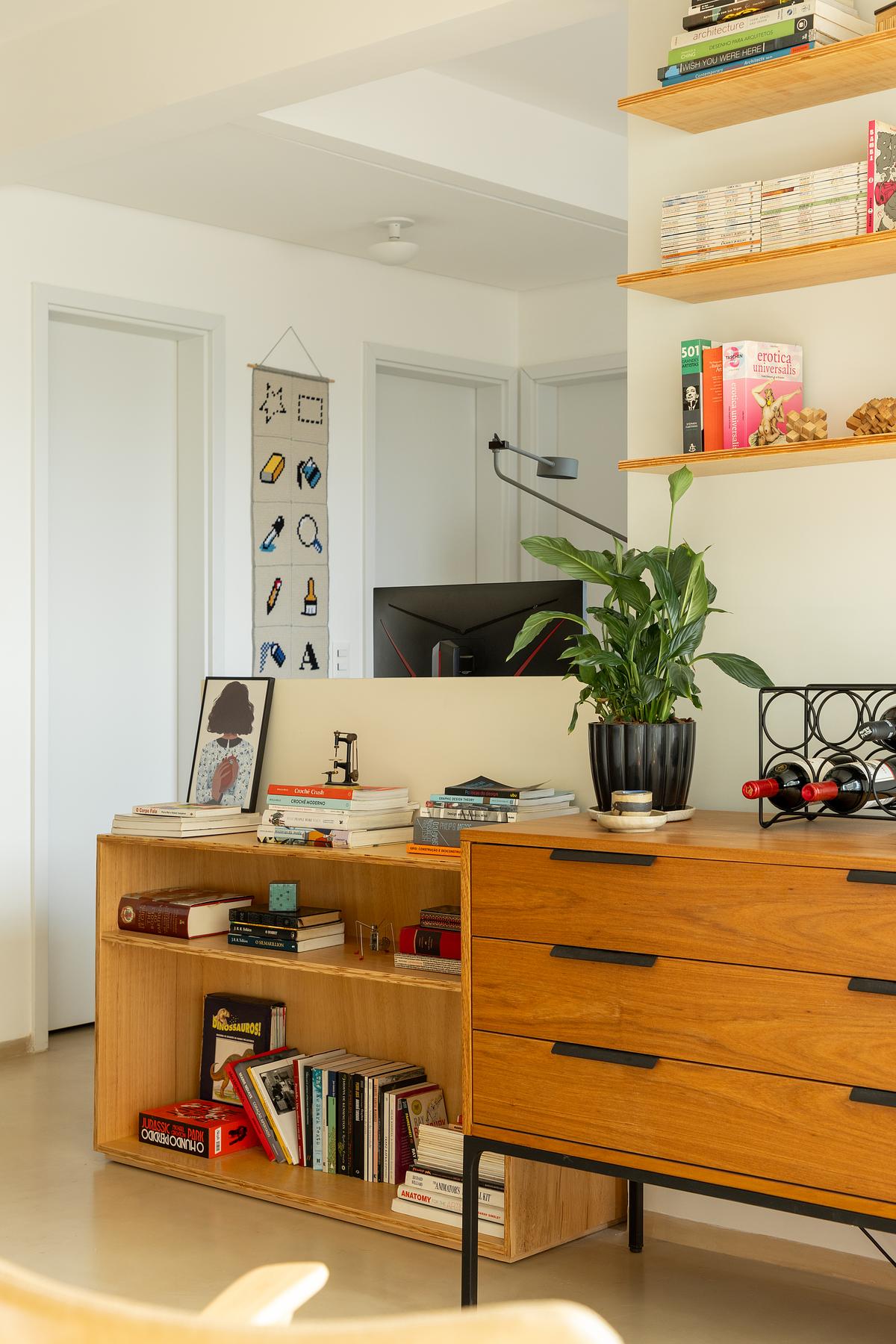
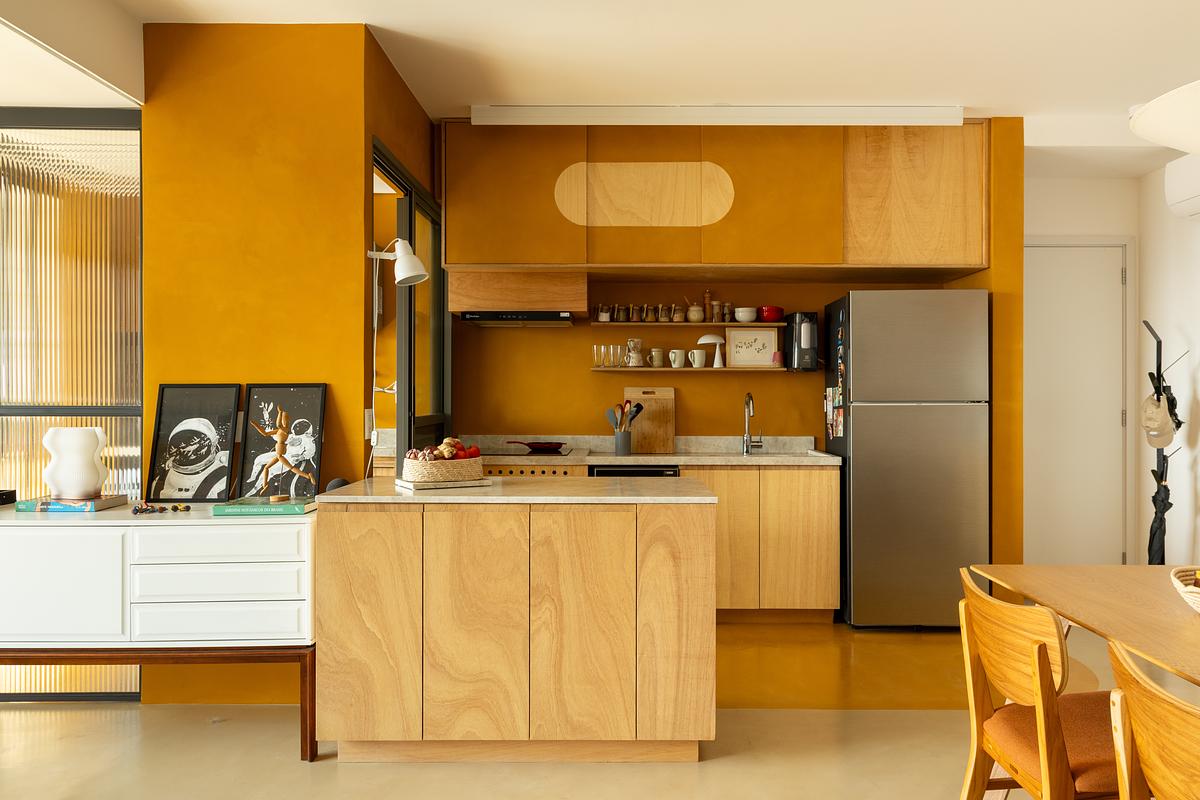
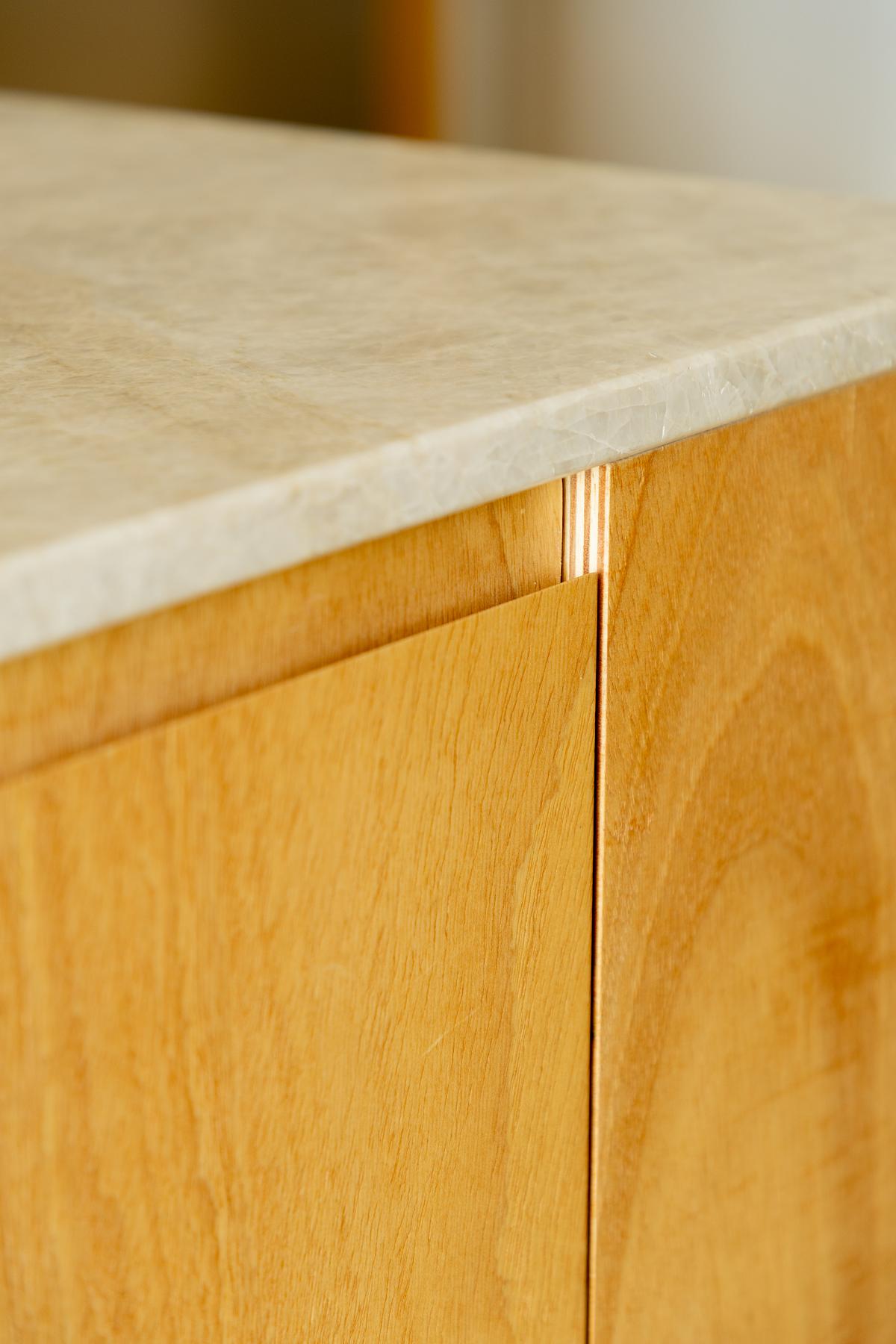
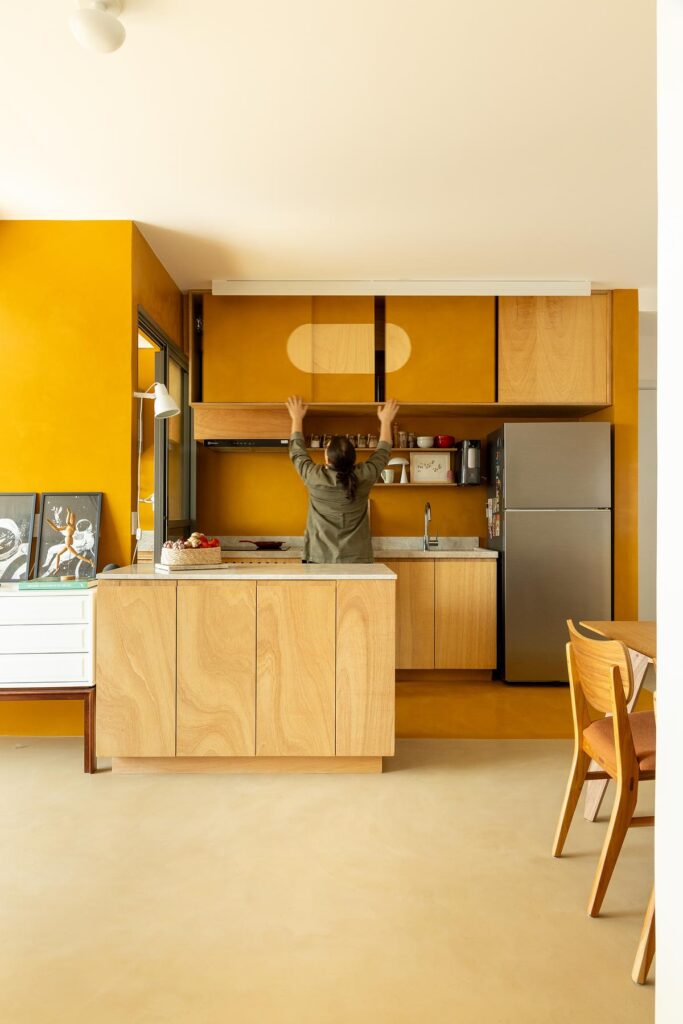
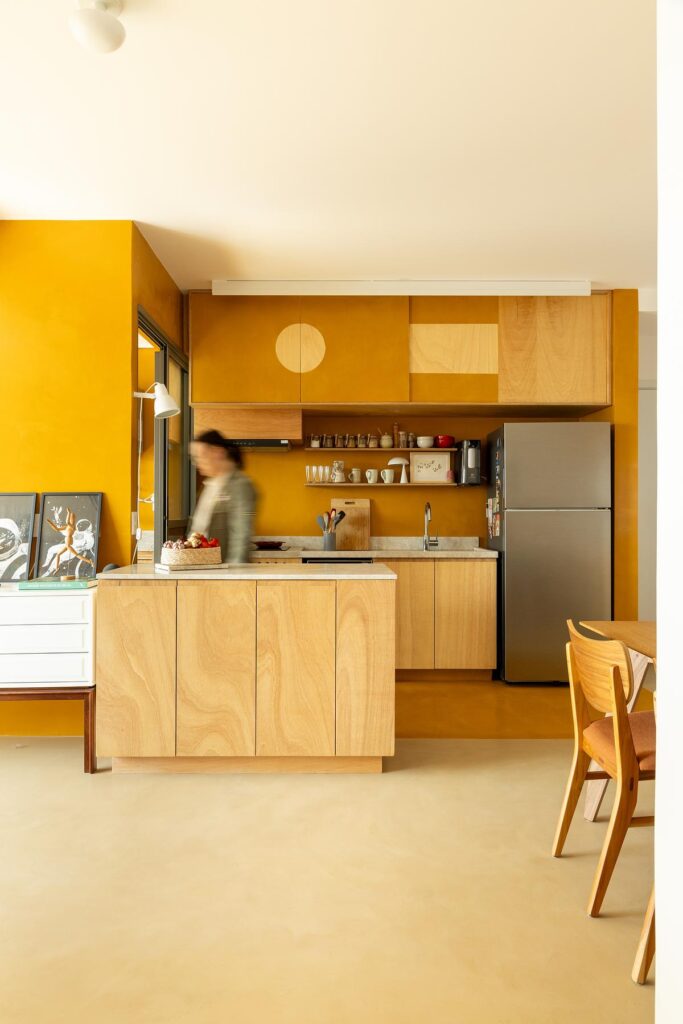
The “sliding puzzle” concept in the kitchen cabinetry is such a playful touch — how did the idea evolve, and what does it say about your approach to everyday spaces?
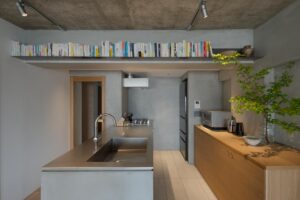
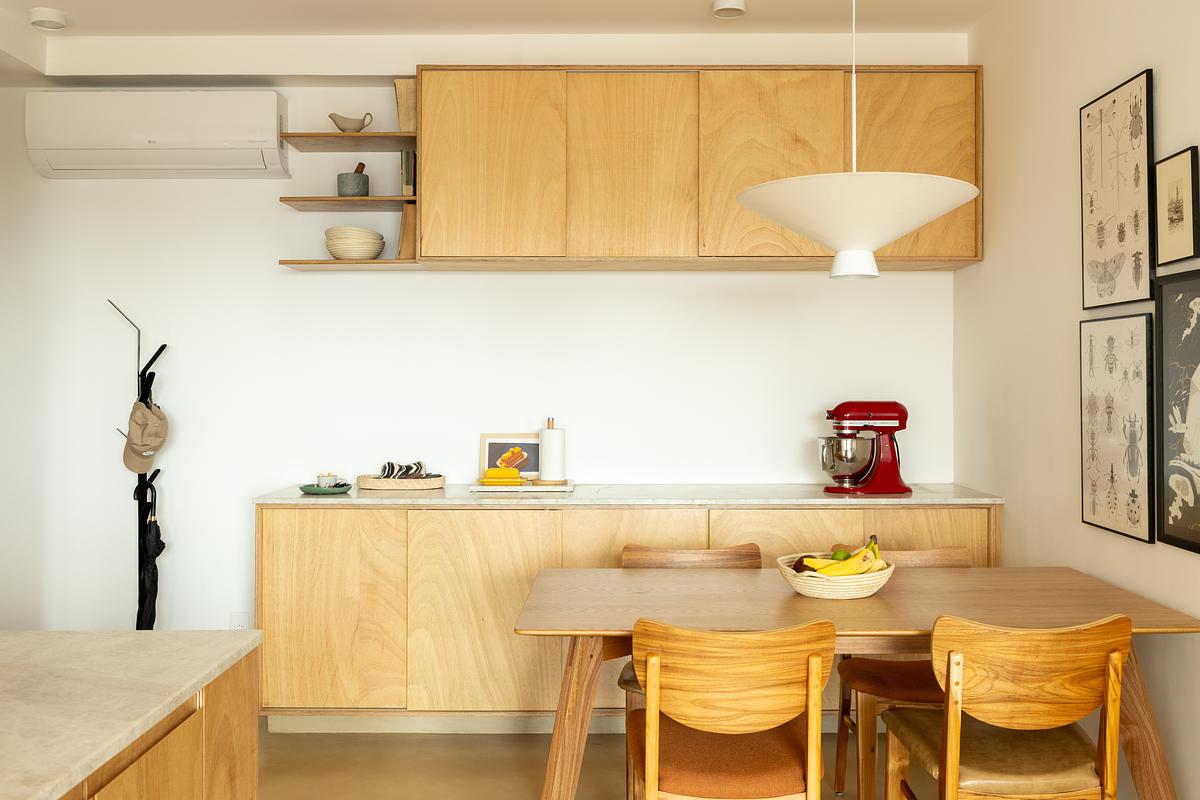
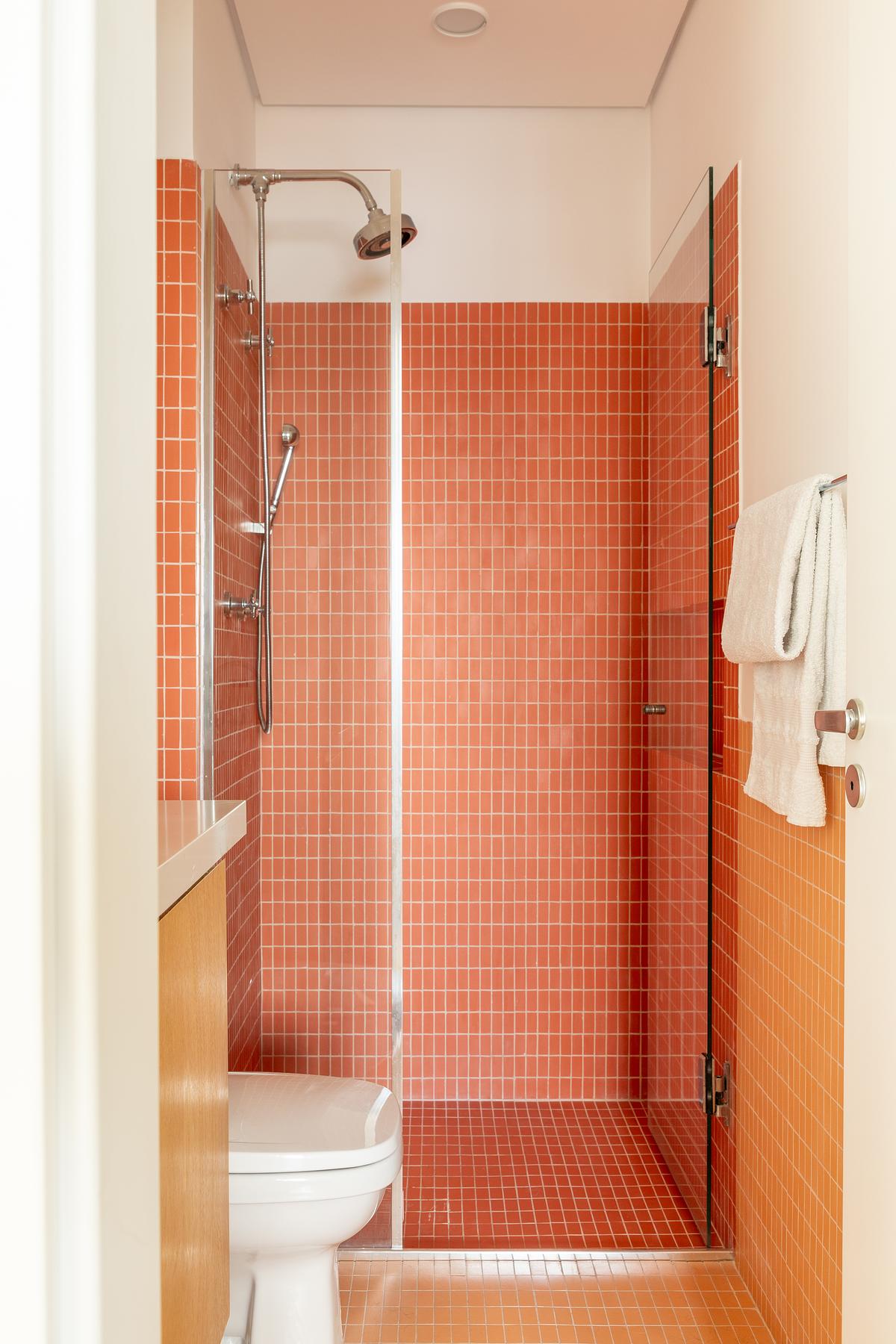
It actually started from something very simple. This concept wasn’t part of the initial sketches. We needed to reach a minimum surface area to justify using the monolithic material applied to the floors and walls — to make it financially viable. Applying it to the cabinetry allowed us to meet that requirement, while also adding a playful, unexpected touch to the apartment.
Whenever we face a problem in our office, we always ask ourselves: “How can we solve this in the best possible way?” and “Is there a way to make it fun?”
This was our answer to those two questions.
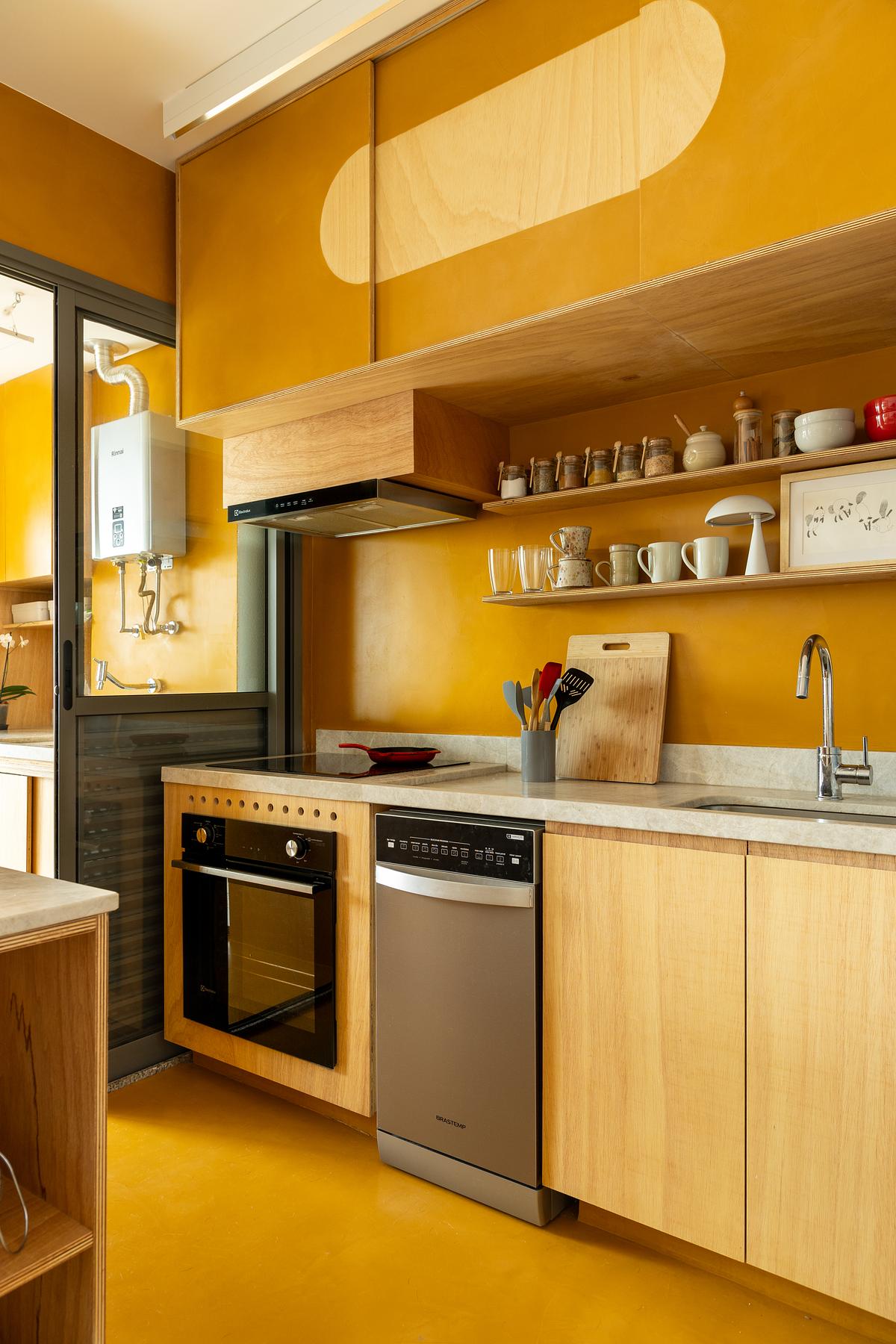
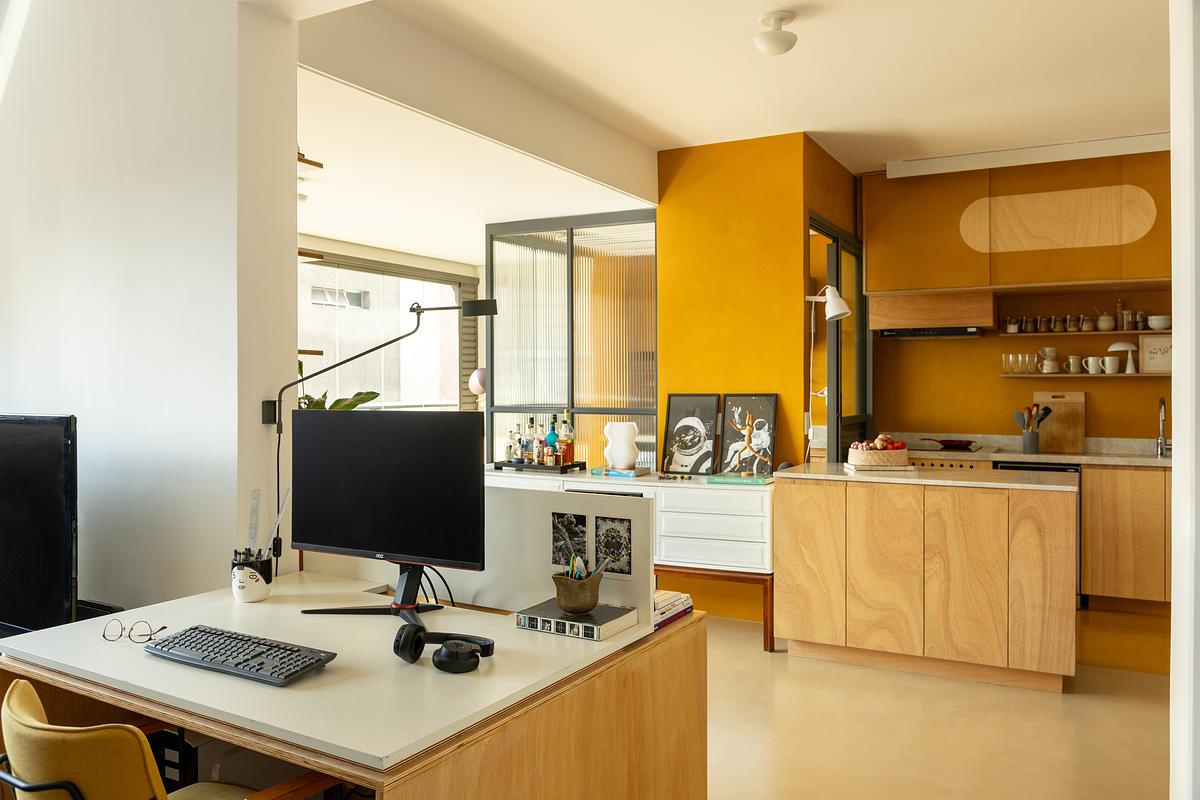
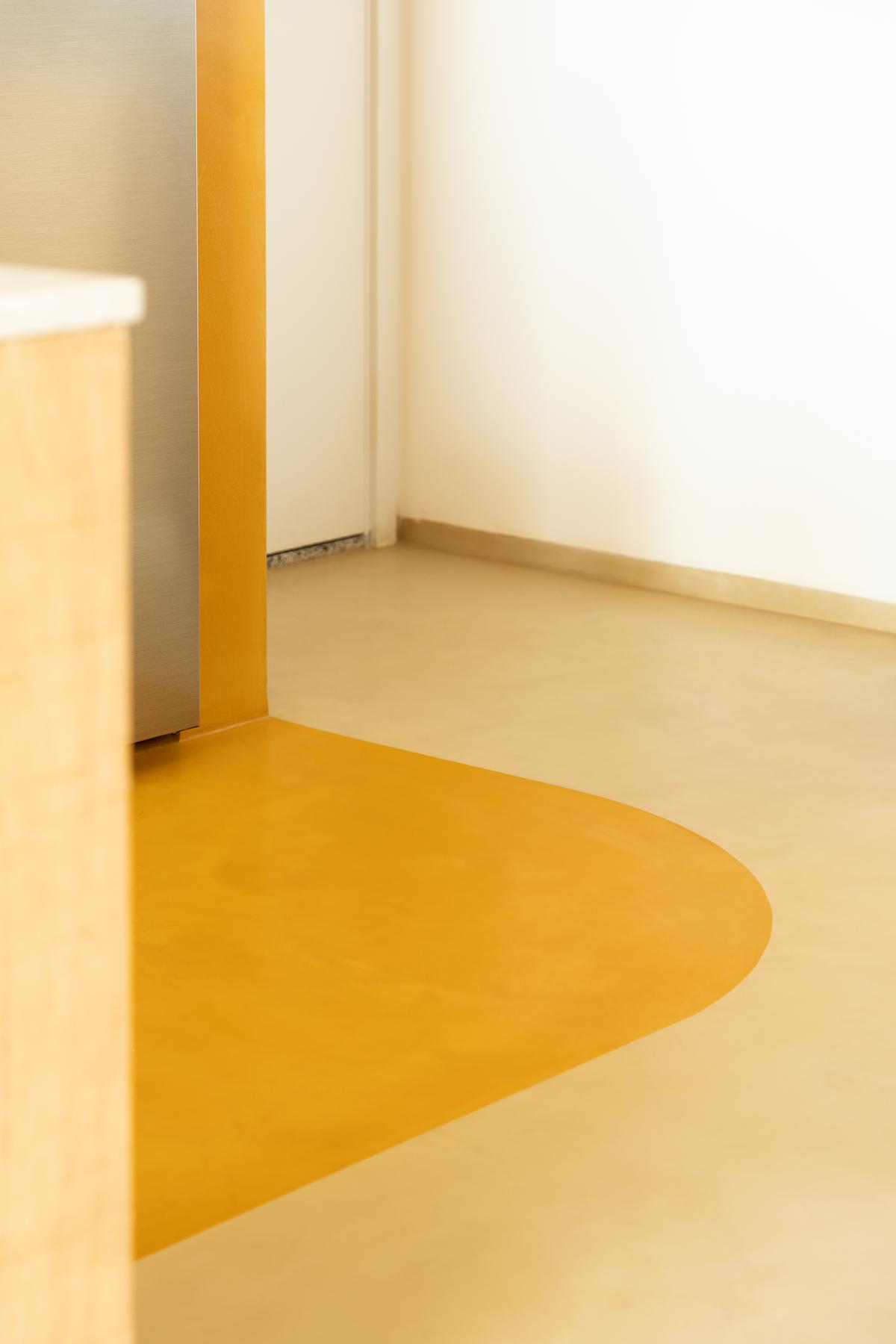
You made bold moves with color and materiality, especially the use of yellow in the kitchen and laundry — how do you balance expressiveness with spatial clarity in compact homes?
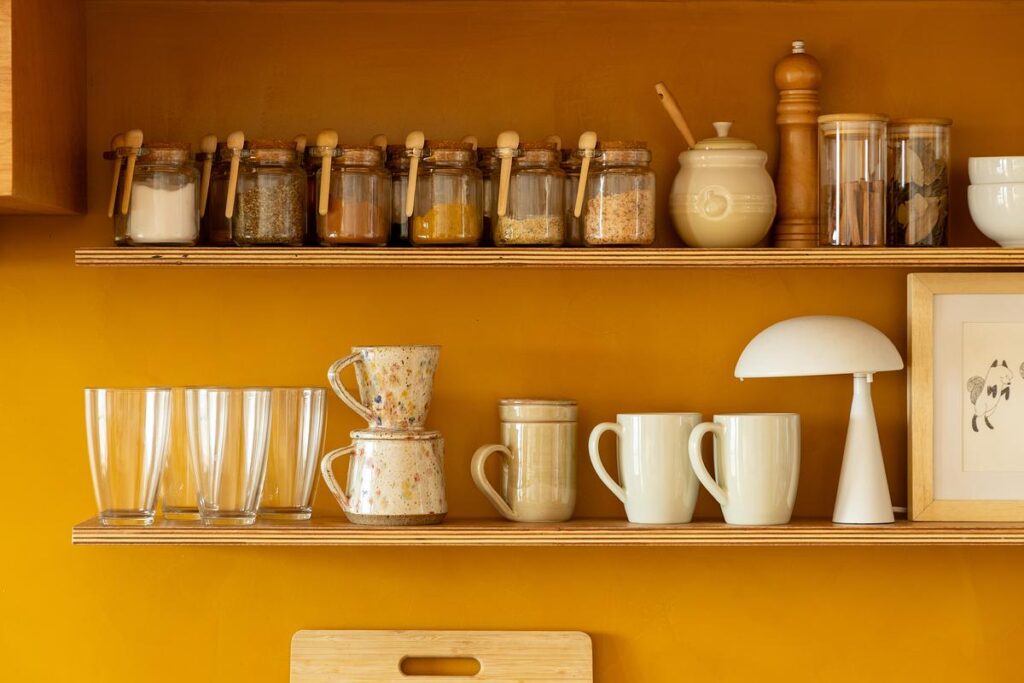
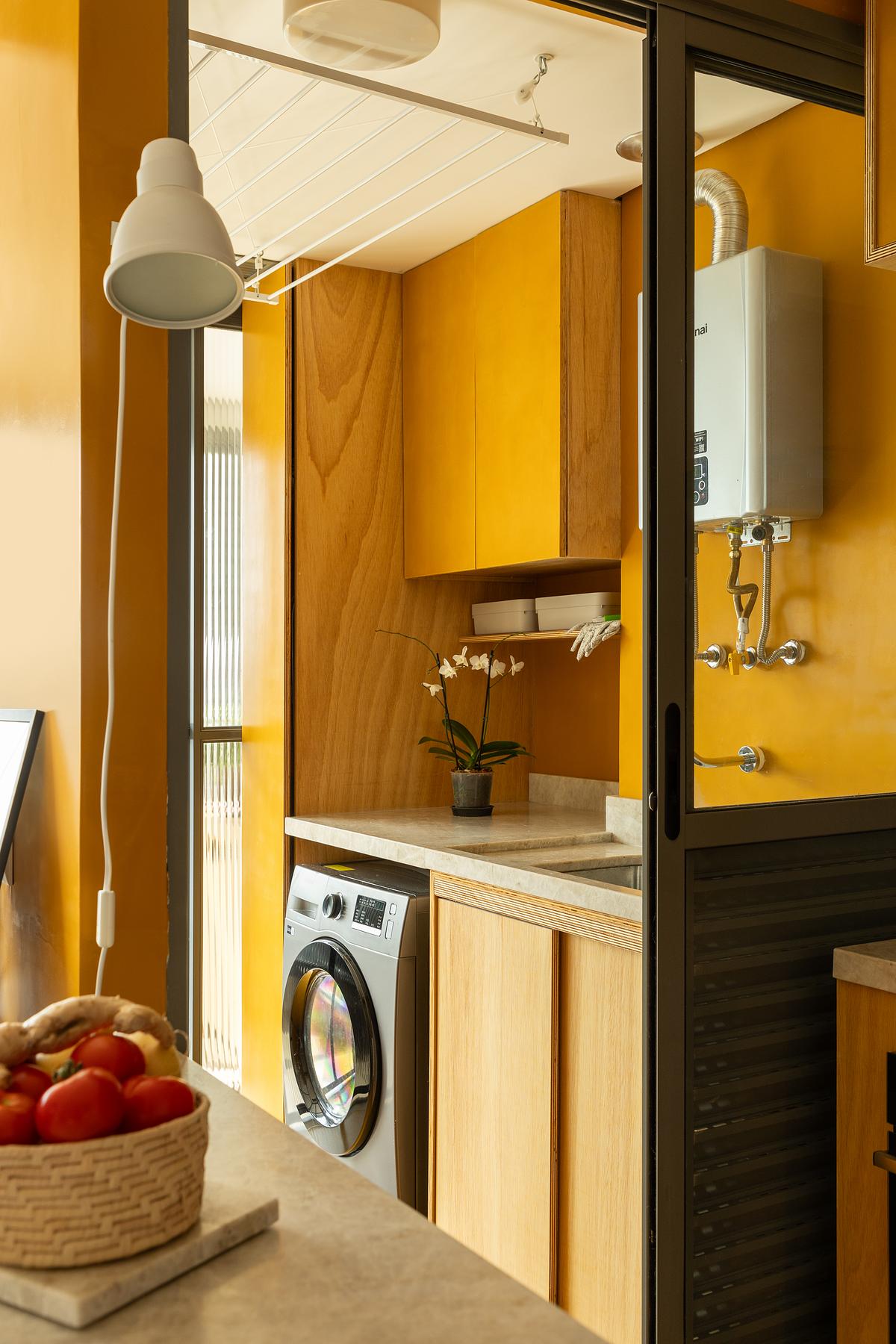
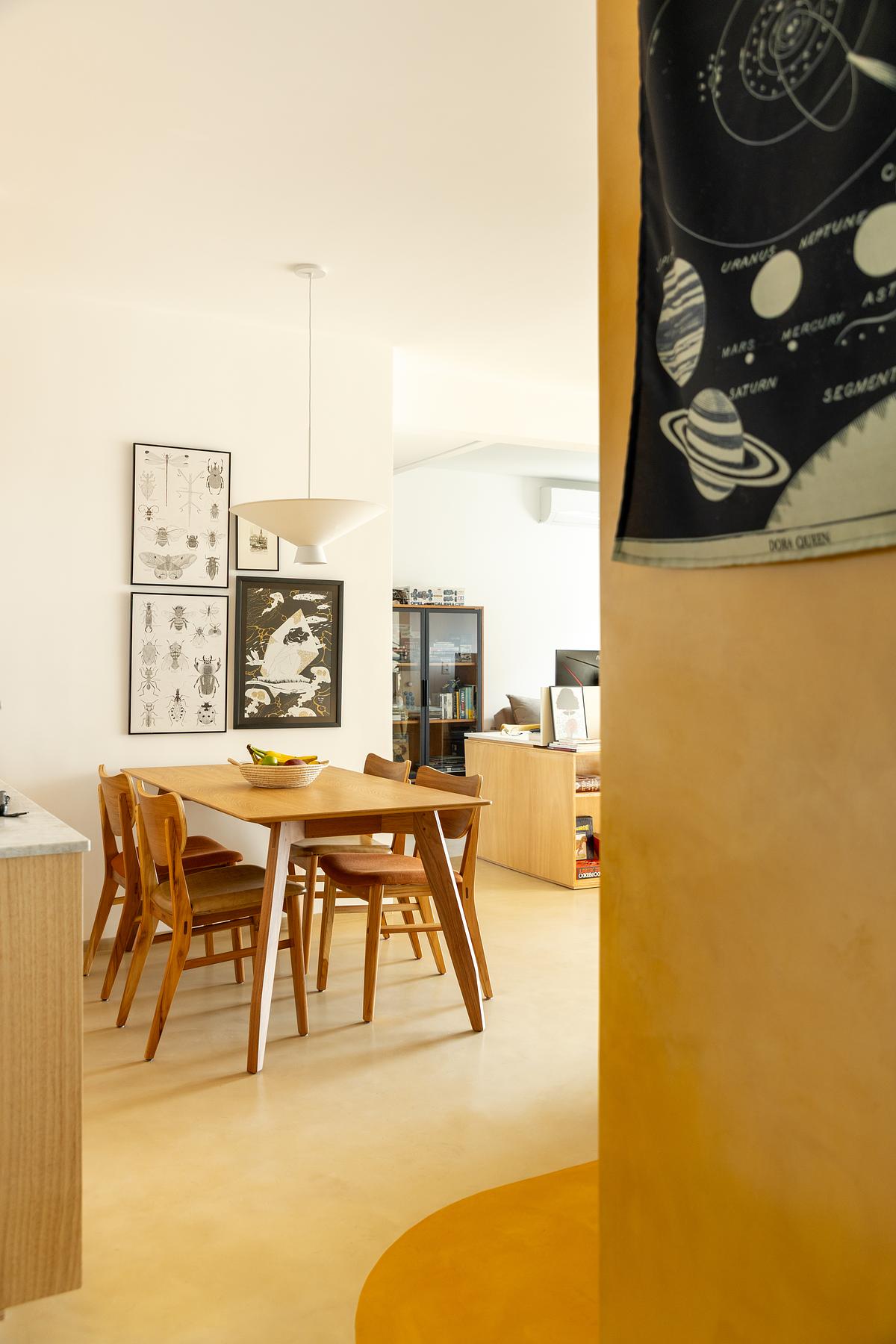
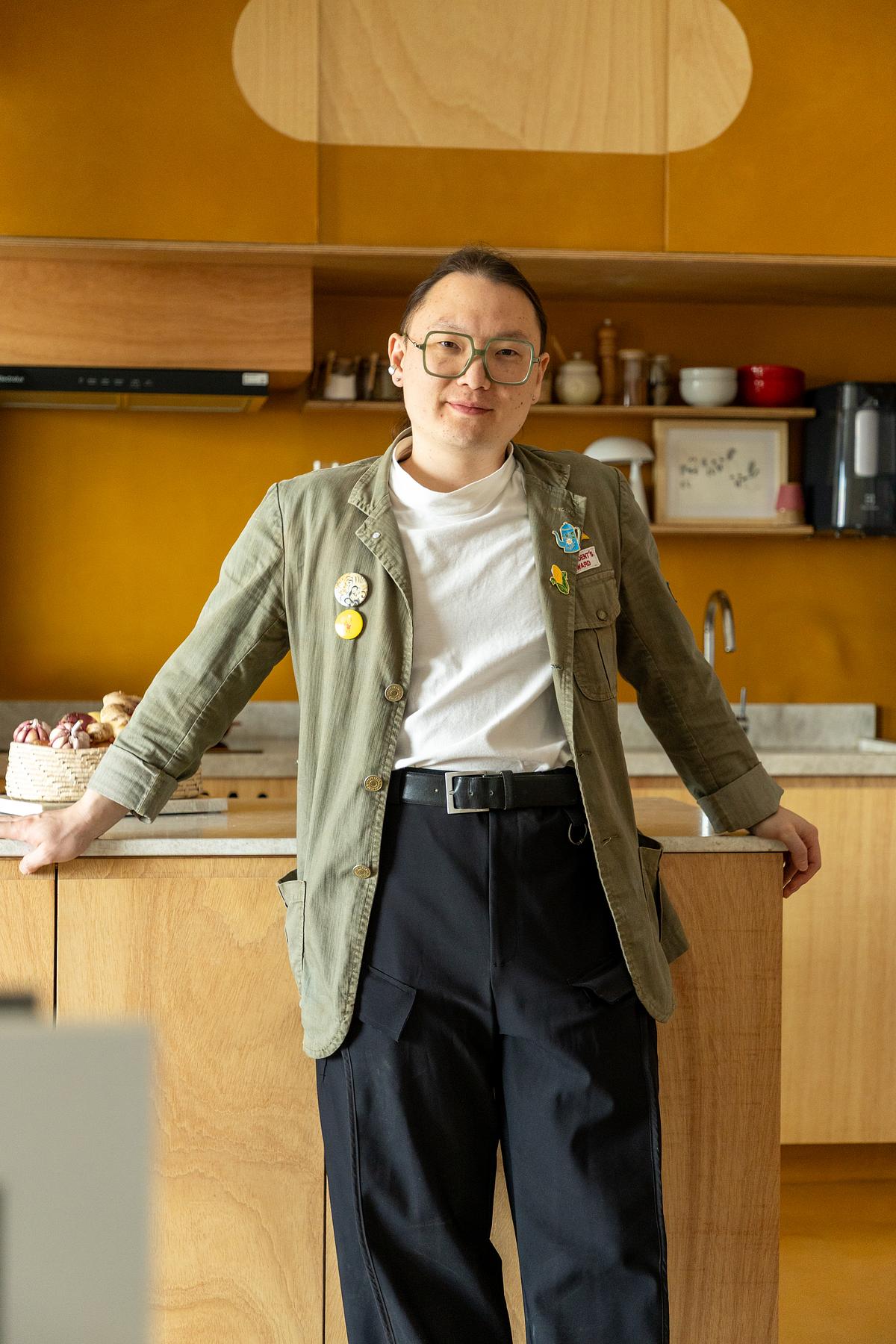
The first thing the couple told us was, “Yellow is our favorite color.” While this is a color rarely used in residential interiors, we try not to question subjective preferences — especially in intimate, private spaces. If it’s a taste they genuinely share, not driven by passing trends, then it must come from something meaningful, whether they can articulate it or not. Our job as architects — or translators — is to give that personal meaning a voice in the space.
By doing so, we help individuals express themselves, and the more people express themselves through their homes, the more we can collectively understand what it means to be paulistano — both individually and as a group.
With this as our cornerstone, we focused on balancing the boldness of this color with other materials and proportions in a compact home. In this case, we chose to highlight the kitchen and laundry areas with it, making these spaces stand out while maintaining overall spatial clarity.
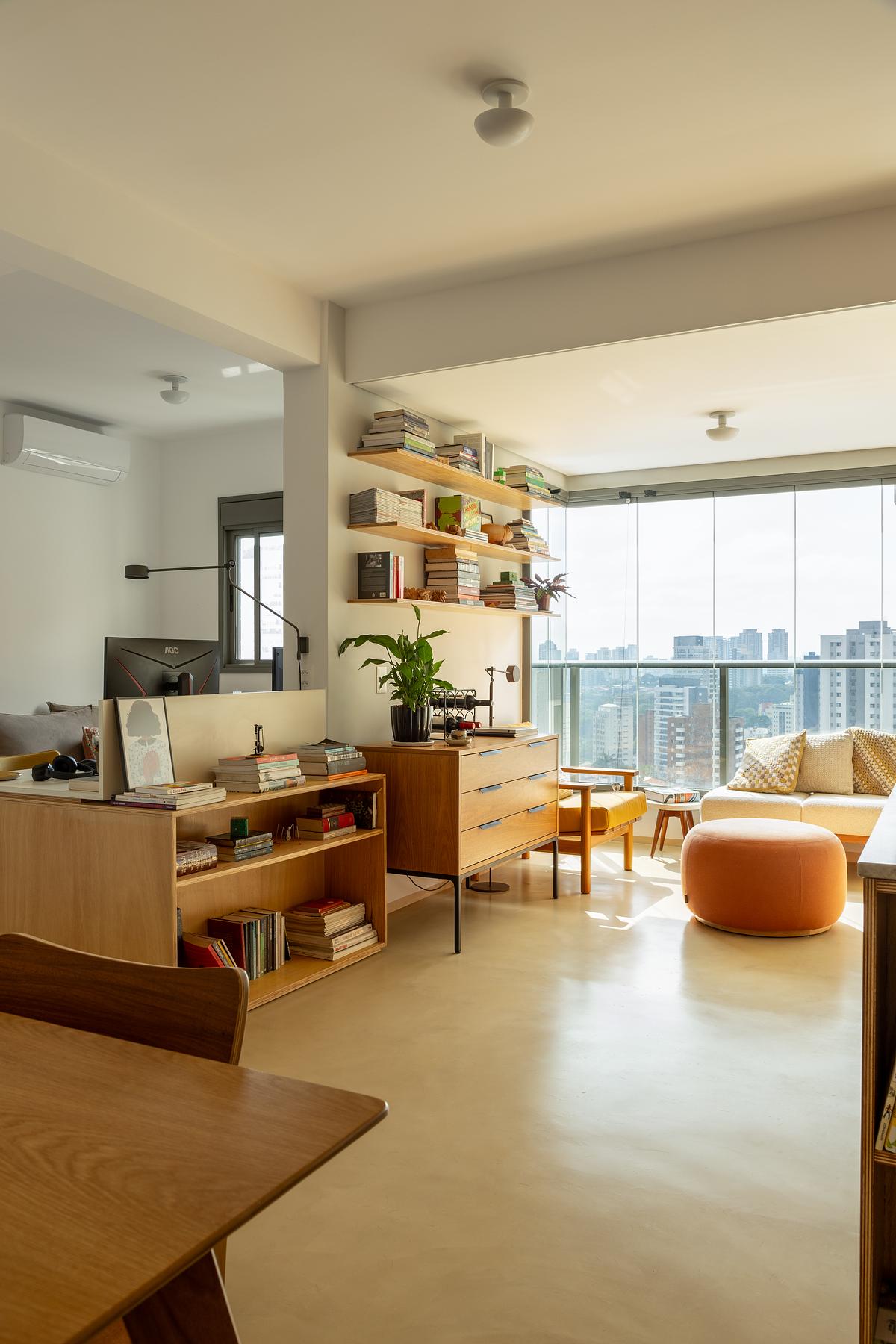
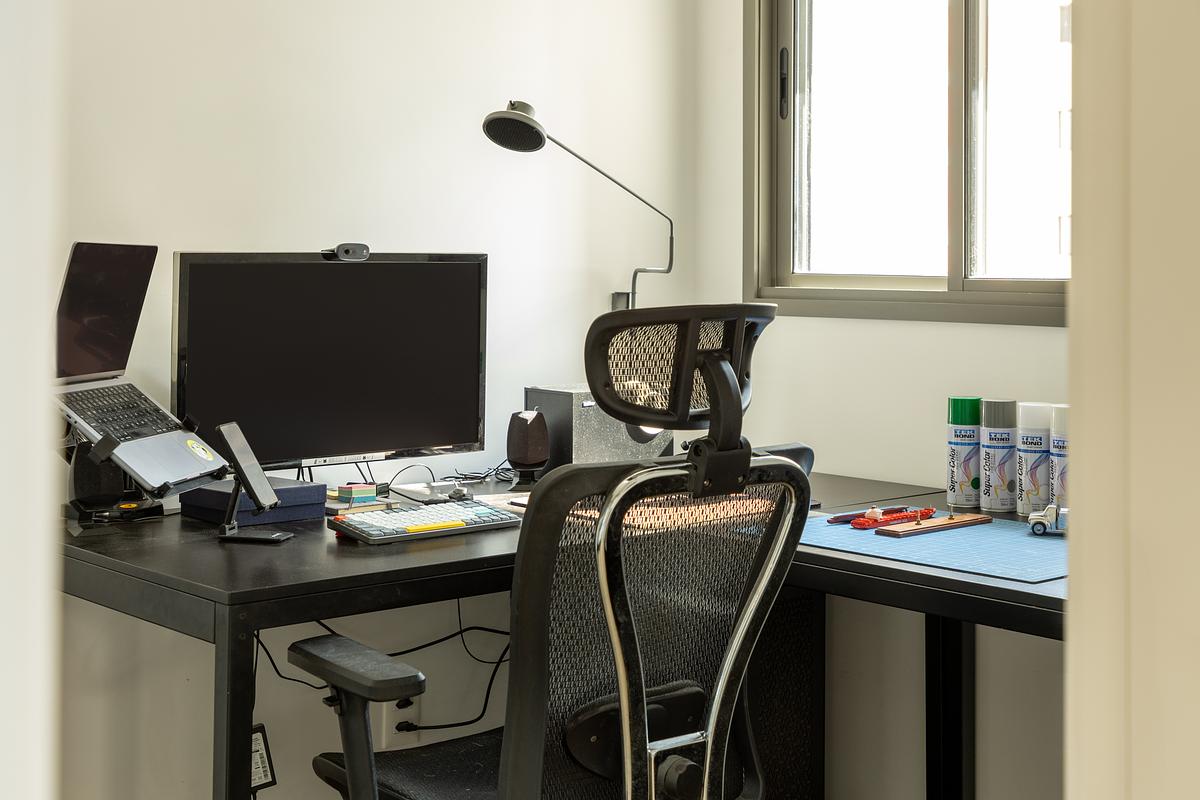
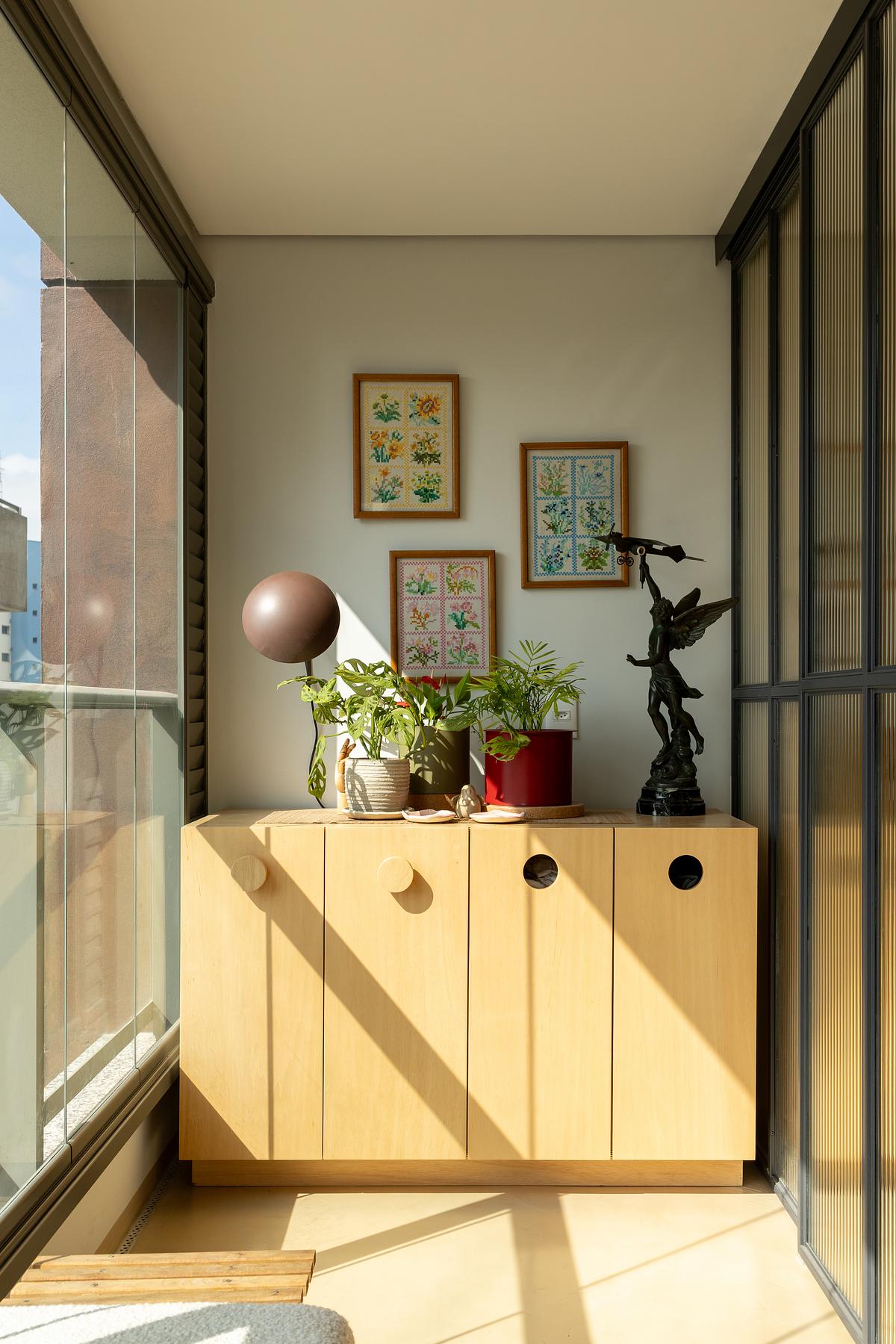
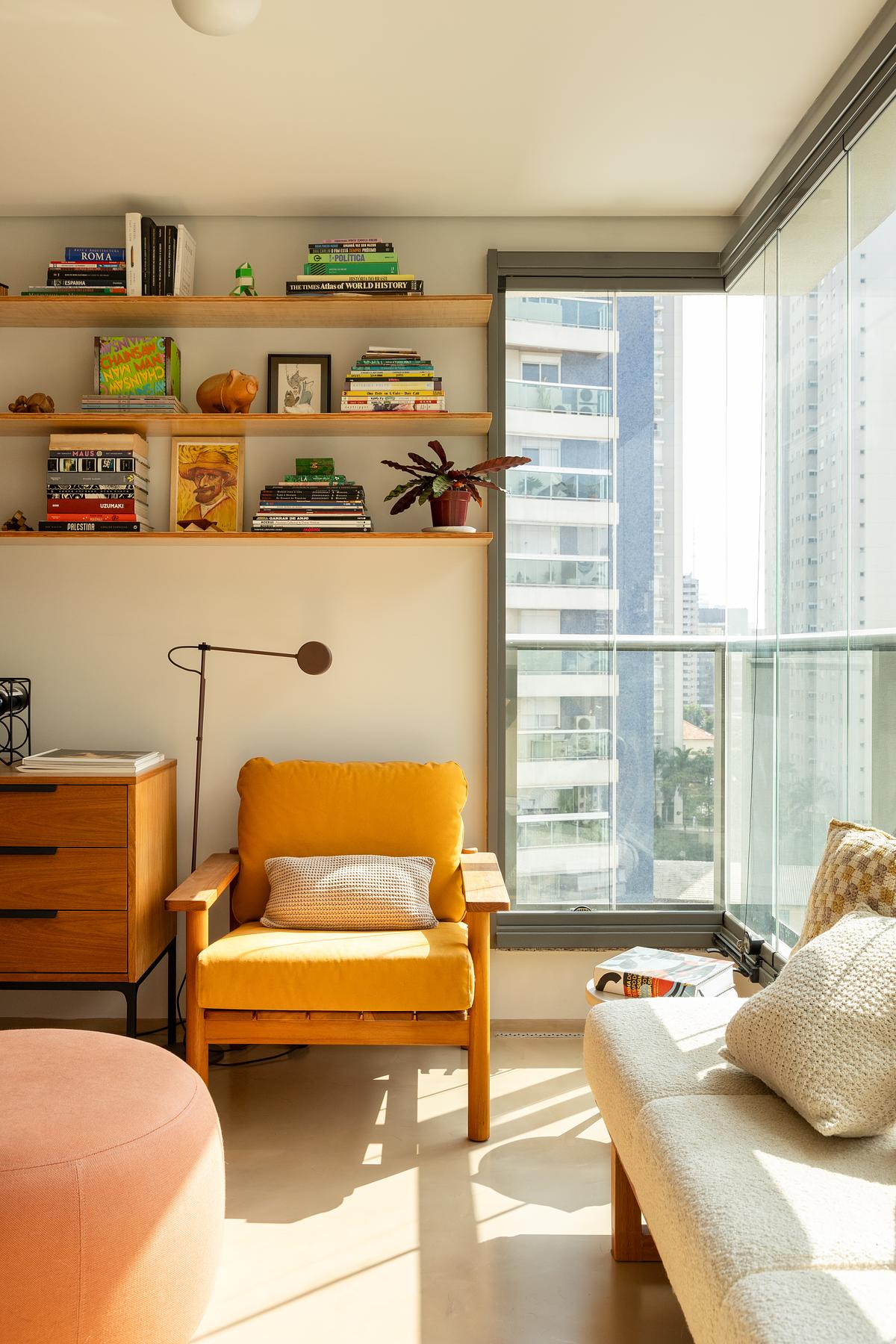
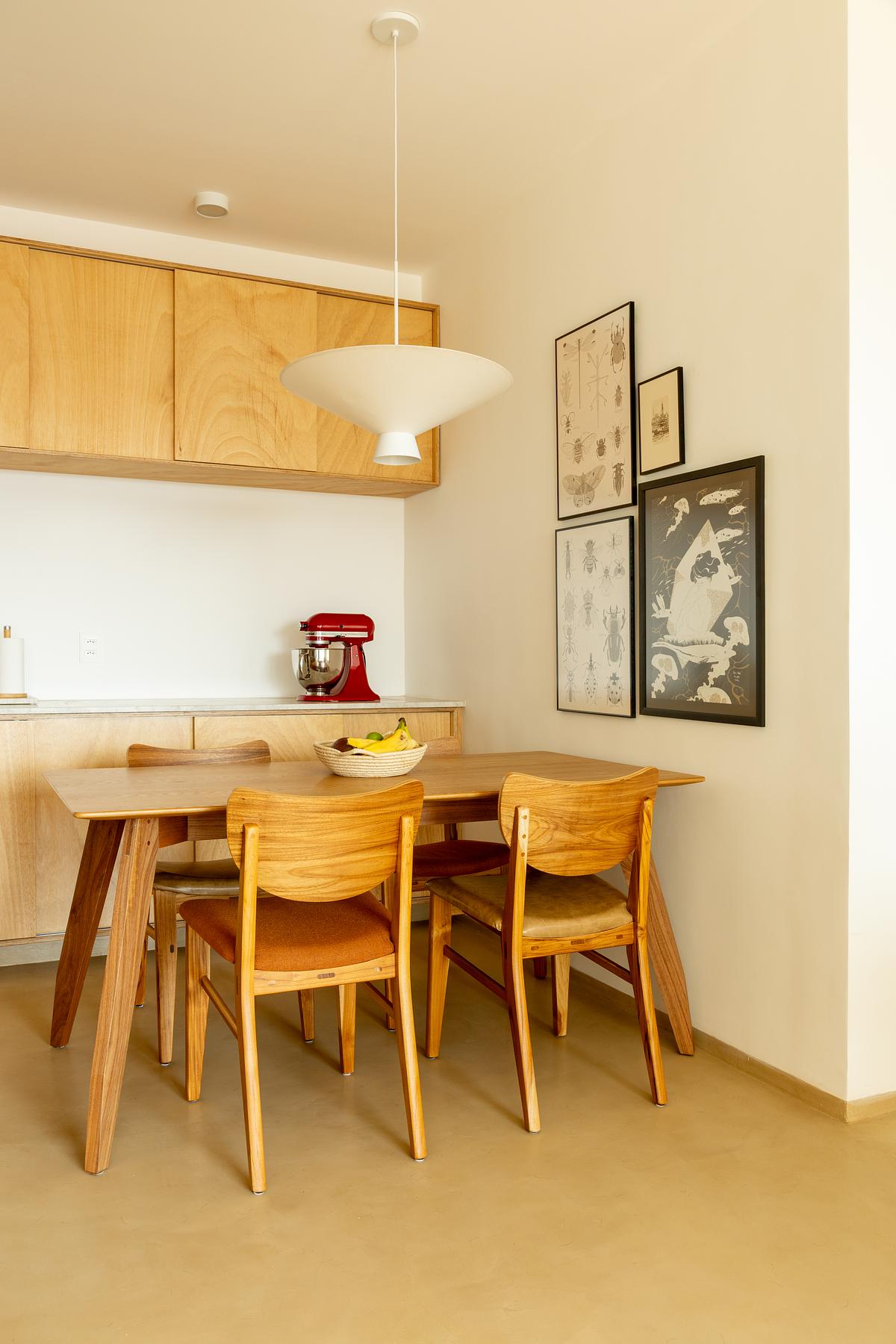
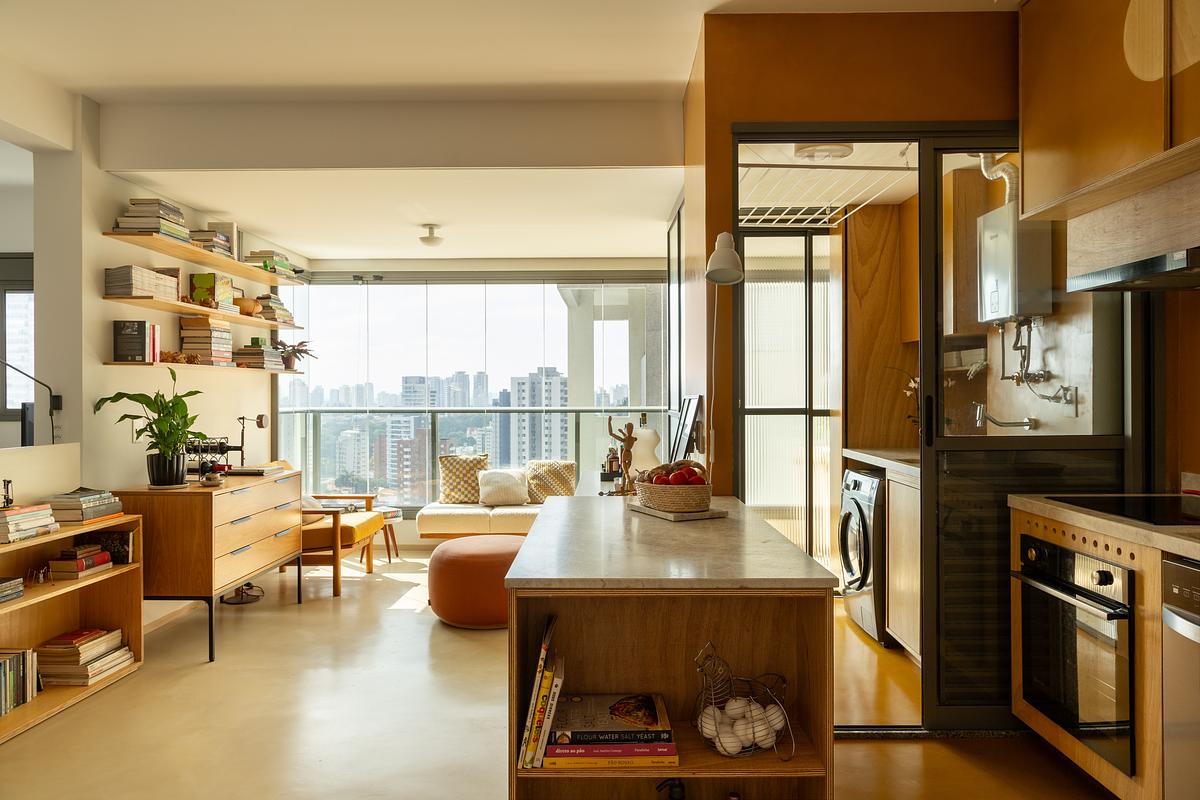
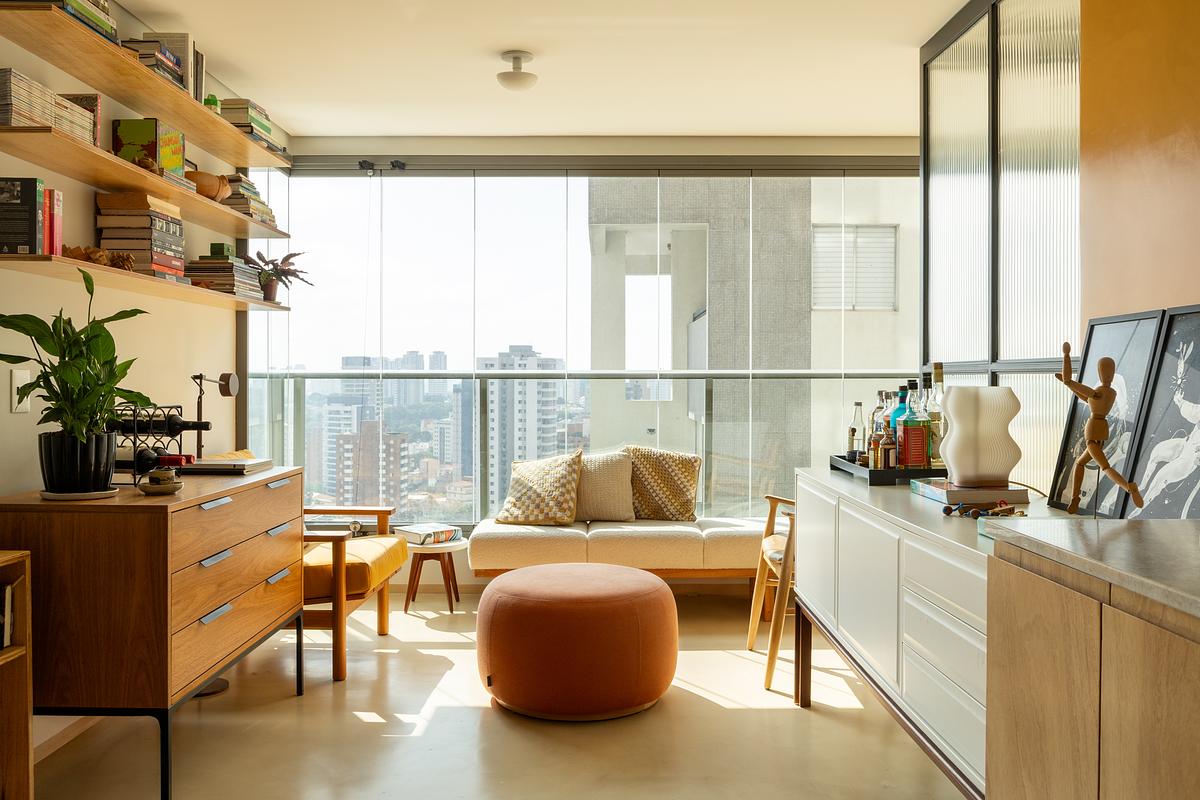
The decision to integrate the balcony, living room, and kitchen dramatically changed the apartment’s feel. What were some of the design or structural challenges in making that openness work? Natural light and cross ventilation were major concerns in the original plan — how did your layout choices and material selections address these environmental aspects?
Integrating the balcony into new apartments in São Paulo is almost a given. Due to local building regulations, most developers design and market their units with this integration in mind — otherwise, the living room would be very small and the balcony disproportionately large. To put it simply, balconies are not counted in the same way as interior space in terms of allowable floor area, so developers can increase unit size without exceeding limits.
Beyond this, our design decisions aimed to improve air circulation and maximize both direct and indirect sunlight without compromising comfort. We wanted the layout and material choices to enhance environmental performance while also fostering better human interactions within the space.
With so many new builds offering copy-paste layouts, what advice would you give to homeowners or renters who want to transform a “standard” unit into a space with identity and joy?
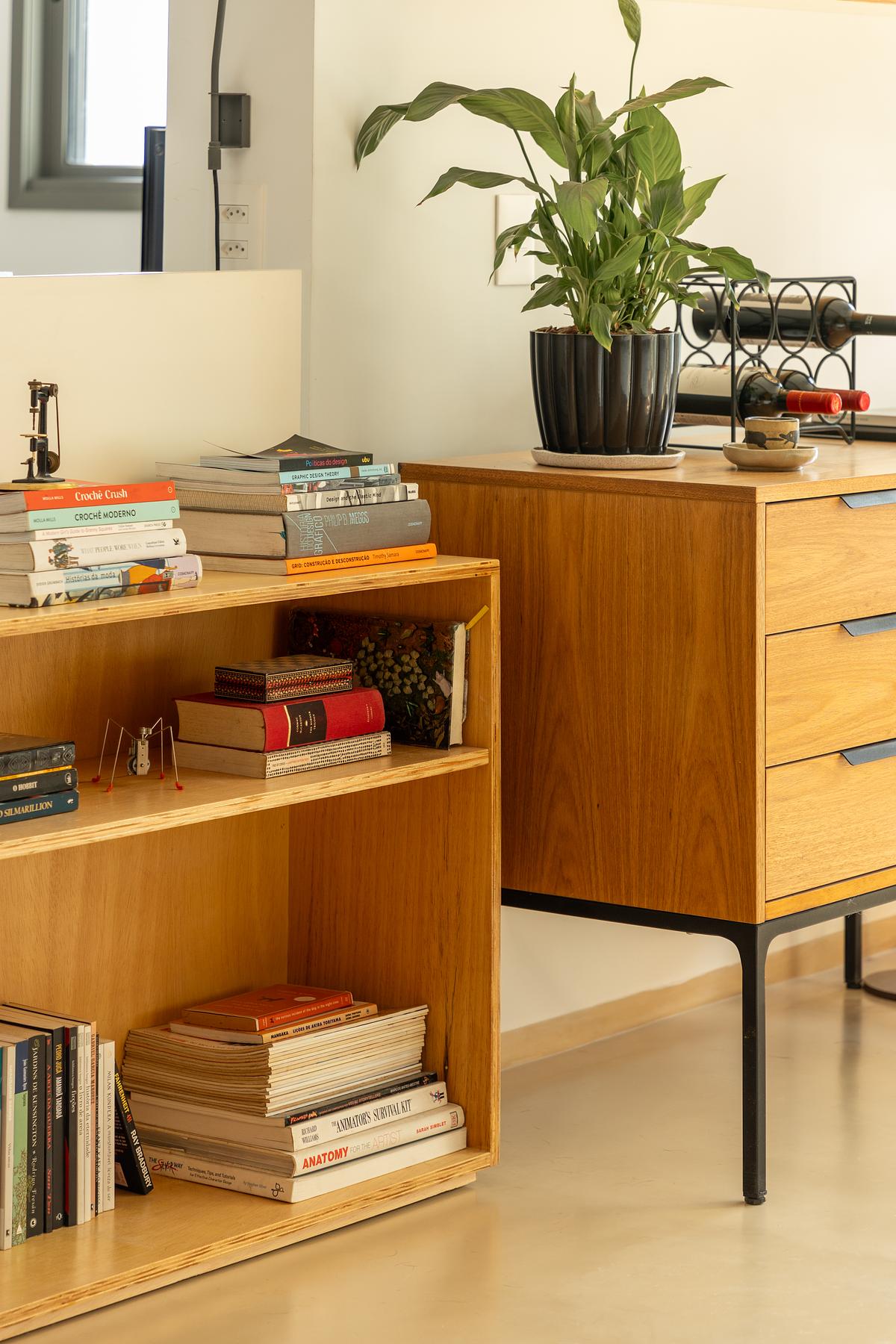
I’d advise people to focus on how they want to live day to day, rather than on the objects they want to own. Cooking with your loved ones comes before choosing the design of the dining table. Enjoying a peaceful moment reading a book comes before deciding on the style of a chair.
Every space shapes the way you live. A room can influence relationships, habits, and even self-understanding. The most important thing is to think about what kind of life will make you feel more peaceful, fulfilled, challenged, and happy — and then shape the space as a means to live that way.